Read the poems here:
Pip: Welcome to osoparavos.com, where the cards are always on the table — sometimes literally.
Mara: This episode follows a single extended work by Adam Donaldson Powell: a poetry cycle that moves through the full Tarot, treating each card as a lyrical meditation on transformation, archetype, and the shape of a life examined.
Pip: So: twenty-two major arcana, four suits, and one long look in the mirror. Let’s start with the poems themselves and what they’re actually doing.
The Magickal Tarot through verse
Mara: The post frames its project from the opening line: “The Tarot is an excellent tool for understanding our psyche, personality and patterns which determine our inseparable past, present and future.” That’s not a mystical claim — it’s a psychological one. The cycle that follows treats each card as a distinct interior state, not a fortune.
Pip: And the Fool is where it begins — which makes sense, because the Fool is where everything begins. Powell’s version, though, is not the blithe innocent stepping off a cliff. He’s something more uncomfortable.
Mara: The poem sets this up directly: “I recognize in his fixed smile the arhythmic and pained beating of my own lonely heart: a reminder that nothing risked is nothing gained.”
Pip: So the journey starts not in ignorance but in longing — an empty vessel that knows it’s empty. That’s a harder place to begin than naivety.
Mara: The accompanying literary analysis makes the stakes explicit: the Fool is positioned as pre-identity consciousness, pure potential, named “Aleph” after the Kabbalistic breath before creation. And the cycle closes the loop — by the Universe card, the now-experienced Fool prepares to begin again.
Pip: That’s the structure underneath the structure. Not a ladder you climb once, but a wheel you ride until you understand what the wheel is.
Mara: The middle of the cycle is where the real pressure builds. Cards like the Devil and the Tower don’t function as warnings about external forces. The Devil poem ends: “Beware of the devil that you are.” No external evil — only unacknowledged self.
Pip: And the Tower follows that logic to its conclusion. If the devil is interior, so is the collapse.
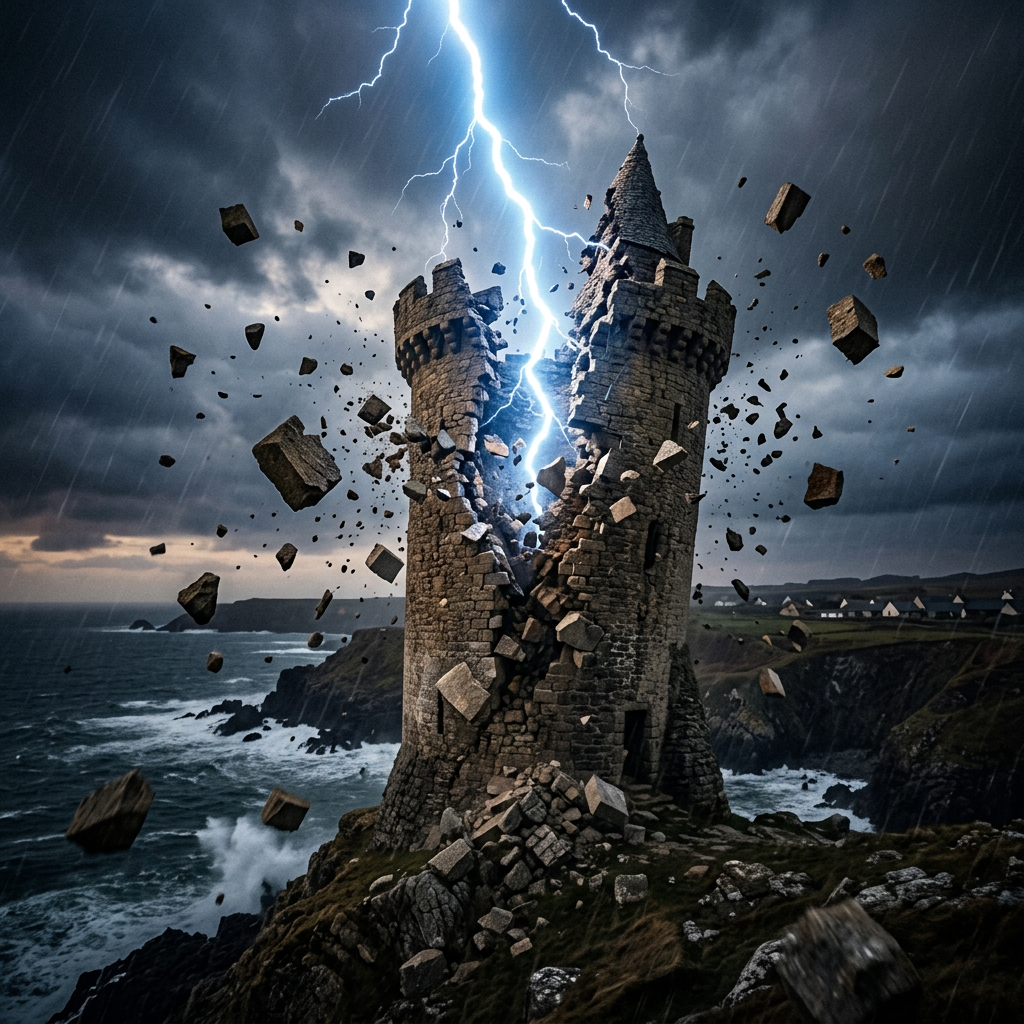
Mara: The Tower poem puts it plainly: “We’re all match-stick architects, forever building precarious structures to contain and conceal our inhibitions and fears.” The analysis reads this as ego death — the necessary breakdown of constructed identity before anything more honest can be built.
Pip: Which makes Death, a few cards earlier, almost reassuring by comparison. At least the gardener knows what he’s doing.
Mara: The Death poem frames transformation in ecological terms — “purification and recirculation of mass and decomposing archetypes into new forms of energy” — and the analysis notes the gardener figure as a sign that the unconscious is purposeful, not chaotic. Destruction with direction.
Pip: The cycle also works as a study in what light can and cannot do. The Star offers genuine renewal after the Tower’s collapse, the Sun restores clarity, but the Moon is a warning: “he who mistakes vision for truth courts folly.”
Mara: That tension between true and false illumination runs through the whole cycle. The High Priestess releases the “collective unconsciousness’ reserves of reflection” as something like mirrored confetti raining from a starry sky — beautiful, but the analysis notes that seeing yourself is not the same as knowing yourself.
Pip: The four suits at the end extend the same logic outward. Wands, Cups, Swords, Disks — each a different mode of engagement with the world, each carrying its own failure condition. The Suit of Swords warns: “Don’t be fooled by appearances.” The Suit of Cups offers the sea-grail, but only to those willing to fill it.
Mara: What the analysis draws out across all of this is that the cycle is designed to be read relationally, not just sequentially. Powell describes “silent connections in between the poems” — meaning each card gains resonance from its neighbors, the way a spread of Tarot cards generates meaning through juxtaposition, not isolation.
Pip: One long interpretive act disguised as twenty-two short poems. Or the other way around.
Mara: The Jungian reading the post develops makes this structural: the sequence maps almost exactly onto individuation — the lifelong process Jung described as moving toward wholeness through confrontation with the unconscious. But Powell’s version refuses the consolation of arrival. The Universe card ends: “our next expression as the Fool.”
Pip: Completion as reset. Which is either deeply wise or a very elegant way of saying the homework is never done.
Mara: The analysis frames it as neither pessimism nor transcendence — just accuracy. The psyche is a process, not an object. And the cycle, by ending where it began, enacts that claim rather than just stating it.
Pip: So the Tarot here is less a set of cards and more a map of every uncomfortable thing the self has to walk through — repeatedly.
Mara: And the poems do the work structurally, not just thematically. The journey loops because that’s what journeys do. More from osoparavos.com next time.
Leave a Reply