
Why Russia Does Not “Give Up” on war and rather Relocate Russian Speakers from Donbas
The question of why Russia does not abandon its war in Ukraine and instead relocate Russian-speaking populations from eastern Ukraine into Russia touches on deeper geopolitical realities than humanitarian concern alone. At first glance, such a solution might appear pragmatic: if Russia claims to be protecting Russian speakers, why not simply grant them citizenship and bring them into Russia proper? However, this logic misunderstands the core motivations behind Russia’s actions. The war is not fundamentally about people—it is about land, power, influence, and historical identity. Russia’s objectives are territorial, strategic, and ideological, making relocation of populations an inadequate substitute for control over Ukrainian territory itself.
To understand this, one must examine the strategic value of the Donbas region, Russia’s broader geopolitical ambitions, its policy of “passportization,” and the symbolic and ideological importance Ukraine holds within Russian political thought.
Territorial and Strategic Value
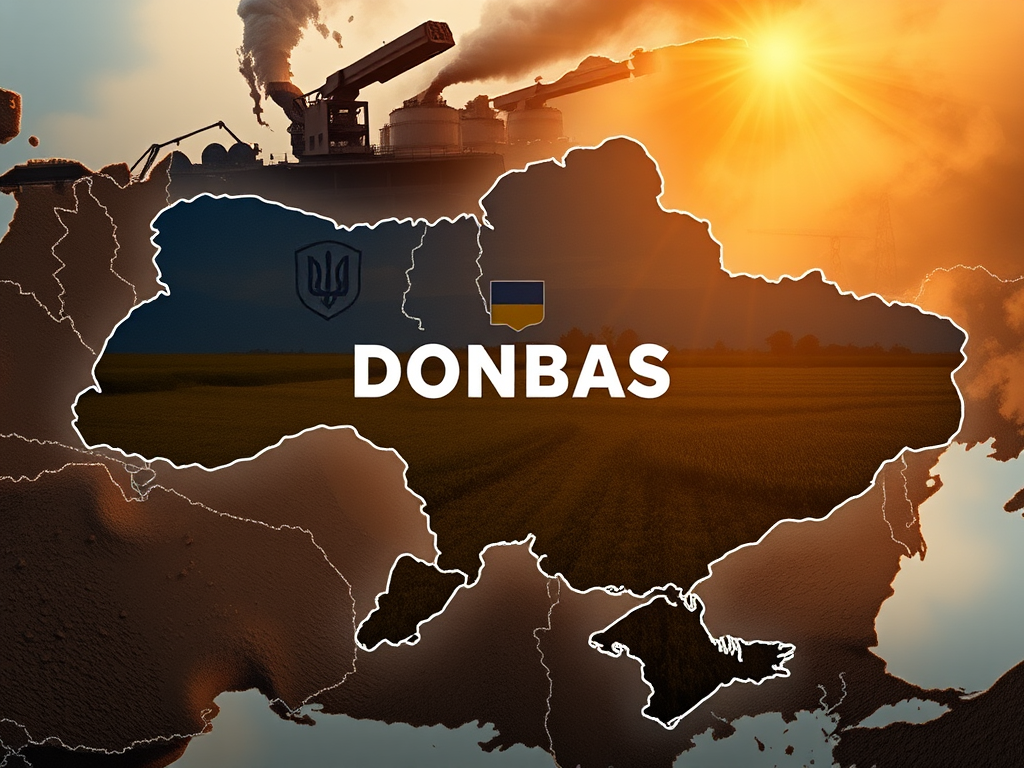
One of the primary reasons Russia continues to pursue control over eastern Ukraine is the tangible strategic value of the land itself. The Donbas region, which includes Donetsk and Luhansk, is one of the most industrialized areas in the former Soviet Union. Historically, it has been rich in coal, steel production, and heavy industry. Even after years of conflict, it remains economically and strategically significant.
Beyond industrial capacity, the region holds agricultural importance. Ukraine as a whole is often referred to as the “breadbasket of Europe,” and eastern Ukraine contributes to this reputation through its fertile farmland. Control over such land provides both economic leverage and food security benefits, which are increasingly important in a world of geopolitical instability.
Perhaps even more critical is the geographic function of the Donbas in creating a “land bridge” between Russia and Crimea. Russia annexed Crimea in 2014, but Crimea is geographically separated from mainland Russia. Control over southeastern Ukraine—particularly the corridor connecting Russia through Donbas to Crimea—ensures reliable logistical, military, and economic access. Without this land bridge, Crimea would remain dependent on vulnerable supply routes, such as the Kerch Strait Bridge.
In addition, control of cities like Mariupol gives Russia dominance over the Sea of Azov and strengthens its position in the Black Sea. Maritime access is a long-standing pillar of Russian strategic thinking. Warm-water ports are essential for naval operations, trade, and projecting power beyond Russia’s borders. Holding southern and eastern Ukraine significantly enhances Russia’s maritime reach.
Finally, territorial control provides a military buffer. Russian leadership has long expressed concern about NATO expansion toward its borders. By occupying parts of Ukraine, Russia effectively pushes potential NATO infrastructure farther away. From a strategic standpoint, this buffer zone reduces perceived threats and increases Russia’s defensive depth.
Geopolitical Objectives
While territorial considerations are crucial, they are inseparable from Russia’s broader geopolitical goals. Chief among these is preventing Ukraine from fully integrating into Western institutions such as NATO and the European Union.
Since the end of the Cold War, NATO has expanded eastward, incorporating former Warsaw Pact countries and even some former Soviet republics. From the Russian perspective, this expansion represents a direct encroachment on its sphere of influence. Ukraine, due to its size, location, and historical ties to Russia, is viewed as especially significant. A Ukraine aligned with NATO would represent not only a military concern but also a symbolic loss of influence in what Russia considers its near abroad.
Maintaining a “frozen conflict” in eastern Ukraine has long been a strategy to block Ukraine’s Western integration. Countries with unresolved territorial disputes face significant barriers to joining NATO or the EU. By sustaining instability in Donbas, Russia effectively limits Ukraine’s ability to move decisively toward the West.
Beyond immediate strategic concerns, there is also an ideological dimension tied to the concept of a “Russian World” (Russkiy Mir). Russian President Vladimir Putin has repeatedly articulated the view that Russians and Ukrainians are “one people” and that Ukraine’s independence is, in some sense, artificial or historically contingent. This perspective frames Ukraine not as a fully separate nation, but as part of a broader Russian civilization.
Under this worldview, relinquishing Ukraine—especially regions with significant Russian-speaking populations—would not simply be a geopolitical setback; it would be a rejection of a core ideological narrative. The conflict thus becomes a means of reasserting influence over former Soviet territories and challenging the post-Cold War international order.
“Passportization” Instead of Relocation
Russia’s policy toward populations in occupied Ukrainian territories further illustrates its priorities. Rather than relocating Russian speakers into Russia, it has pursued a strategy known as “passportization”—the distribution of Russian citizenship to residents of these regions while they remain in place.
Since 2019, and especially following the escalation of the war in 2022, Russia has issued large numbers of passports to residents in occupied areas. In many cases, this process has involved significant pressure. Access to essential services such as healthcare, employment, and social benefits has often been contingent on accepting Russian citizenship. While some individuals may have taken passports voluntarily for pragmatic reasons, the broader system creates strong incentives that blur the line between choice and coercion.
This approach serves several purposes. First, it allows Russia to claim that it is protecting its own citizens. By redefining the population as Russian, the state can justify military and political actions as defensive rather than aggressive. This narrative is important both domestically and in international messaging.
Second, passportization helps solidify administrative and political control over the territory. Citizenship is a key mechanism through which states exert authority. By integrating residents into the Russian legal and bureaucratic system, Moscow strengthens its hold over the region without needing to physically relocate populations.
Third, and perhaps most importantly, this strategy supports the goal of territorial annexation. If the population of a region is officially Russian, then the territory itself can be presented as rightfully belonging to Russia. This logic was used in the annexation of Crimea and has been echoed in the formal incorporation of other occupied regions.
Relocation, by contrast, would undermine these objectives. Moving people out of Donbas would leave the territory depopulated and economically weakened, making it less valuable and harder to control. It would also contradict the narrative that these areas are inherently Russian lands inhabited by Russian people.
Symbolic and Historical Importance
In addition to strategic and geopolitical factors, the symbolic significance of eastern Ukraine plays a crucial role. The Donbas region occupies an important place in Soviet history as a center of heavy industry and labor identity. It was often portrayed as a heartland of the working class—a place where the ideals of socialism were realized through industrial production and collective effort.
This legacy continues to resonate in Russian political discourse. The idea of the “Soviet man”—a hardworking, industrial citizen contributing to a collective project—is closely tied to regions like Donbas. For Russian leadership, reclaiming or controlling such areas carries not just material benefits but also historical and emotional weight.
More broadly, Ukraine itself holds a central place in Russian historical narratives. The origins of the East Slavic civilization are often traced to Kievan Rus’, centered in present-day Ukraine. This shared history is frequently invoked to argue for a deep cultural and political unity between Russians and Ukrainians.
From this perspective, losing Ukraine—or accepting its full integration into Western institutions—would represent a profound rupture in Russia’s historical identity. The conflict thus becomes not only a geopolitical struggle but also a contest over history, memory, and national identity.
Why Relocation Is Not a Viable Substitute
Given these factors, the idea of simply granting citizenship to Russian speakers and relocating them to Russia fails to address the underlying goals of the war. Such a policy would achieve none of Russia’s key objectives.
It would not secure strategic territory, maintain a buffer zone, or guarantee access to critical maritime routes. It would not prevent Ukraine from aligning with NATO or the EU. It would not support claims of historical unity or territorial legitimacy. And it would not reinforce Russia’s influence over the post-Soviet space.
On the contrary, relocation would amount to a tacit acknowledgment that the territory belongs to Ukraine. It would concede the very ground that Russia seeks to control, both physically and symbolically.
Conclusion
Russia’s continued involvement in Ukraine, particularly in the Donbas region, cannot be understood through a purely humanitarian lens. While the protection of Russian speakers is often cited as a justification, it is not the primary driver of policy. The conflict is rooted in a complex interplay of territorial ambition, strategic calculation, geopolitical competition, and historical identity.
Control over eastern Ukraine offers economic resources, military advantages, and critical geographic connections. It serves broader goals of limiting Western influence and maintaining regional dominance. Through policies like passportization, Russia seeks to integrate both the land and its people into its sphere of control, rather than removing them.
Ultimately, the war reflects a deeper struggle over the shape of the post-Cold War world and the boundaries of national identity in Eastern Europe. Relocating populations would not resolve this संघर्ष because the conflict is not fundamentally about where people live—it is about who controls the land they live on, and what that control represents.
Leave a Reply