Pip: osoparavos.com — where the heavy questions get asked in four languages simultaneously, which is either ambitious or a sign that some truths need more than one tongue to carry them.
Mara: This episode centers on one extended piece by Adam Donaldson Powell — a poem about depression, the black dog, and what it actually means to live alongside darkness rather than be erased by it.
Pip: Let's start with the dog.
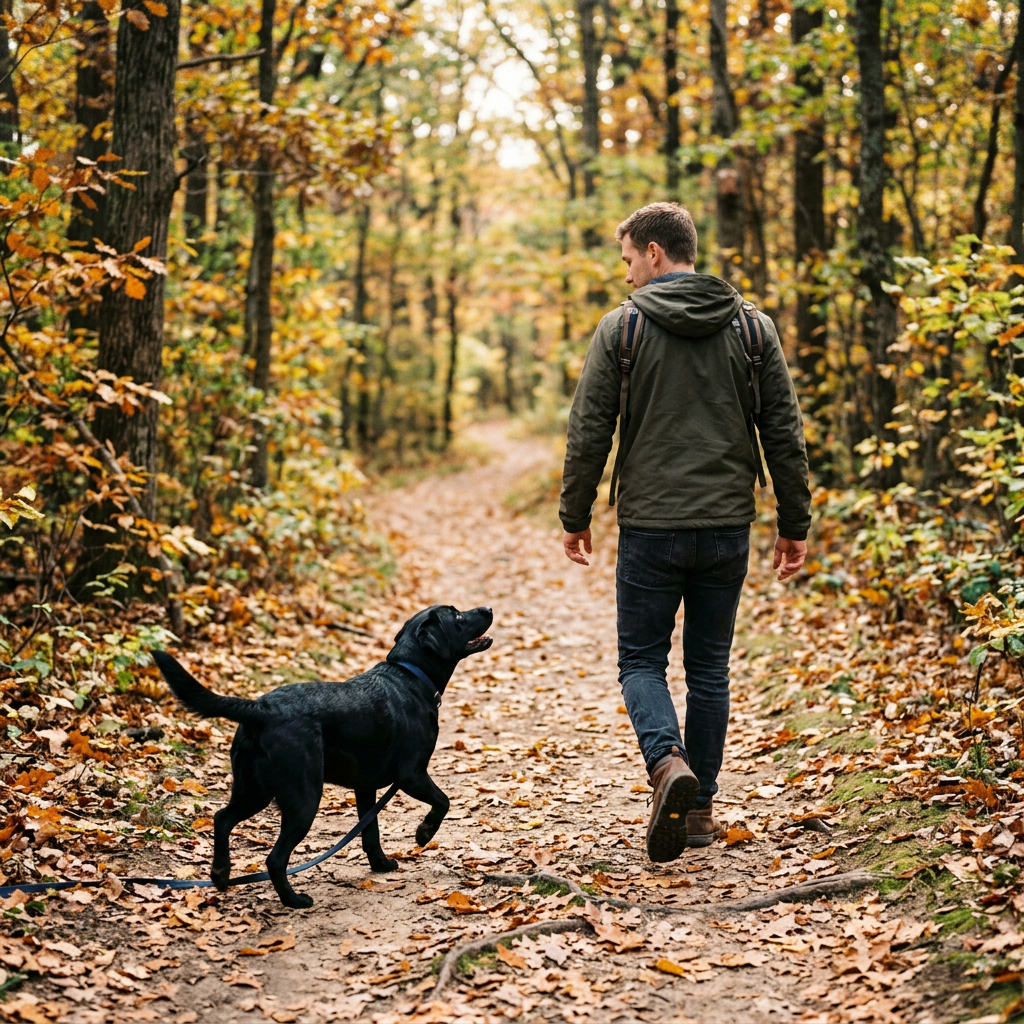
The Black Dog, the Leash, and the Long Walk
Mara: The poem frames depression not as an enemy to defeat but as a presence to understand — something that walks beside you, not something that gets to write your story.
Pip: And the poem earns that framing early. The black dog arrives not barking, not biting — just breathing. The threat is atmospheric before it's ever direct.
Mara: The anchor image lands here: "Not every thought deserves a throne. Not every cruel whisper deserves a microphone. The voice that says you are worthless is only a voice — a radio stuck between stations, a ghost wearing my handwriting."
Pip: A ghost wearing your own handwriting. That's the mechanism of self-contempt in one clause — the cruelty feels native because it speaks in your own register.
Mara: The author's reflection makes this explicit. He writes that self-hate is, in his framing, "a fast lane to self-destruction" — the second wound becoming a war against the first. The illness takes energy; contempt takes the rest.
Pip: So the poem's move isn't heroic resistance. It's something quieter and harder — learning the dog's shape, offering it water, telling it: you are not the king of this country.
Mara: That distinction between self and suffering is the spine of the whole piece. Not "I am darkness," but "there is darkness walking beside me." The author calls that small linguistic shift a survival tool.
Mara: The poem also runs in Norwegian, French, and Italian — the same image of the black dog trailing Horace through Rome, sitting beside Samuel Johnson, following Churchill through the corridors of power, rendered across each language without losing the intimacy.
Pip: Four languages, one leash.
Mara: And the sequel stanza the author appends makes the terms explicit: the dog may sit at the table, may warn you when the weather changes — but it does not get to choose your name or write your story.
Pip: The difference between cohabitation and surrender is the whole argument, compressed into a lease agreement with your own darkness.
Mara: What stays with you is the closing image — not victory, but direction. "Come on, old dog. We're going somewhere better."
Pip: Four languages, one poem, one very old dog — and somehow the point sharpens rather than scatters across the translations.
Mara: The idea that naming the distance between self and suffering can become a survival tool — that's worth sitting with long after the episode ends.
Leave a Reply