— Adam Donaldson Powell & Gemini

The relationship between American literature and substance abuse is one of the most romanticized, tragic, and exhaustively documented phenomena in cultural history. Throughout the 20th century, a striking percentage of the nation’s most celebrated poets and novelists battled alcoholism and drug addiction. From the quiet desperation of Jazz Age expatriates to the explosive, chemically fueled experiments of the Beat Generation, substance abuse was frequently intertwined with the creative process.
However, examining this relationship requires moving past the myth of the “tragic genius.” Substance abuse among US writers was rarely a direct engine of creativity; rather, it functioned as a coping mechanism for immense psychic weight, a byproduct of mid-century cultural pressures, and a reflection of the deep-seated American tension between individualism and alienation.
The Mid-Century Novelists: Alcohol as the Writer’s Companion
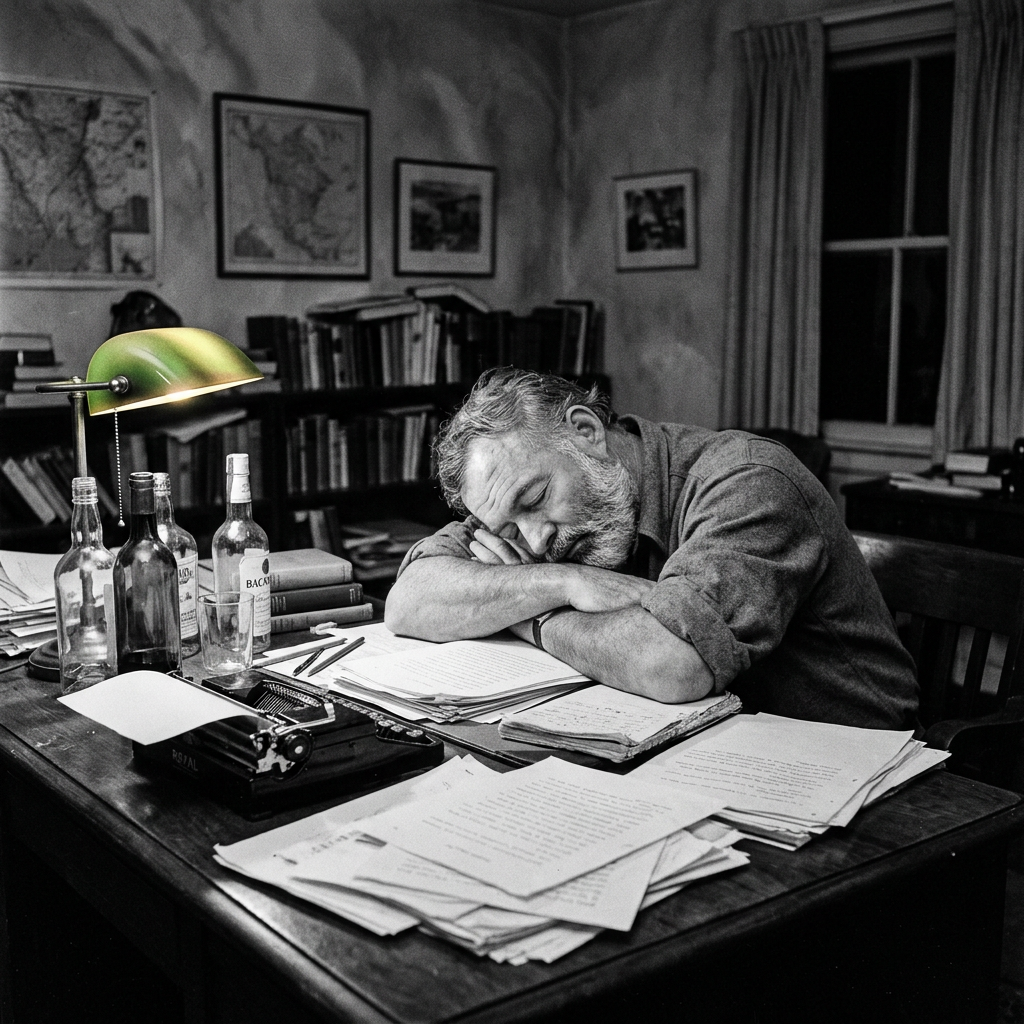
For the generation of writers who emerged between the World Wars, alcohol was woven into both the social fabric and the solitary labor of writing. F. Scott Fitzgerald, Ernest Hemingway, William Faulkner, and John Steinbeck all struggled with severe alcoholism.
In this era, drinking was heavily tied to a specific construction of American masculinity and the archetype of the tortured intellectual. Hemingway famously romanticized drinking in his fiction, using it as a symbol of resilience and camaraderie. Yet in his personal life, severe alcoholism eroded his physical health and exacerbated the depression that eventually led to his suicide. Faulkner, who famously claimed he could write only with a dish of whiskey at hand, suffered from catastrophic binge-drinking episodes that frequently landed him in institutional care.
For these novelists, alcohol served several functions:
- The “Off” Switch: Writing requires an intense, hyper-vigilant state of observation. Alcohol provided a brutal but effective way to silence the critical mind at the end of the day.
- Mitigating Alienation: The act of long-form writing is profoundly isolating. Bars and drinking cultures offered a counterweight to the loneliness of the desk.
- Coping with Early Fame: Writers like Fitzgerald achieved massive success early in life, using alcohol to dull the crushing anxiety of having to constantly repeat their initial triumphs.
The Confessional Poets: The Pain of the Unfiltered Self
As the century progressed into the 1950s and 60s, the focus of American literary substance abuse shifted dramatically toward the poetic avant-garde, particularly the Confessional Poets. Writers like John Berryman, Robert Lowell, Anne Sexton, and Sylvia Plath turned away from the objective, modernist style of T.S. Eliot to write deeply autobiographical poetry dealing with trauma, mental illness, and domestic claustrophobia.
For the Confessionalists, the boundaries between the art and the self were entirely dissolved. To write their poetry, they had to plunge into their deepest psychological wounds. Alcohol, barbiturates, and amphetamines became standard tools to manage the volatile emotional states required to produce this work.
John Berryman’s lifelong battle with alcoholism eventually culminated in his suicide in 1972. His Dream Songs serve as a devastating, fragmented map of an addicted mind. Anne Sexton openly chronicled her reliance on alcohol and psychiatric medications, utilizing them to stave off severe depression before she, too, took her own life. For these poets, substance abuse was not a source of inspiration, but a desperate, failed shield against internal agony.
The Beat Generation: Chemical Exploration and Countercultural Rebellion
By the mid-1950s, the Beat Generation offered a fundamentally different philosophy regarding substance abuse. Where the older novelists used alcohol to numb themselves and the Confessional poets used it to survive their internal demons, the Beats viewed drugs as keys to liberation, spiritual enlightenment, and artistic breakthrough.
Led by figures like Jack Kerouac, Allen Ginsberg, and William S. Burroughs, the Beats rejected standard post-WWII American consumerism and conformity. They sought what French poet Arthur Rimbaud called a “systematic derangement of all the senses.”
                     ┌────────────────────────┐
                     │  THE BEAT GENERATION   │
                     │   Chemical Trinitiy    │
                     └───────────┬────────────┘
        ┌────────────────────────┼────────────────────────┐
        ▼                        ▼                        ▼
┌───────────────┐        ┌───────────────┐        ┌───────────────┐
│  AMPHETAMINES │        │  PSYCHEDELICS │        │    OPIATES    │
│ (Benzedrine)  │        │(Marijuana/LSD)│        │   (Heroin)    │
├───────────────┤        ├───────────────┤        ├───────────────┤
│ Fueled rapid, │        │ Used to mimic │        │ Addressed deep │
│ spontaneous   │        │ spiritual     │        │ existential   │
│ prose style.  │        │ visions.      │        │ isolation.    │
└───────────────┘        └───────────────┘        └───────────────┘
Jack Kerouac: The Benzedrine Sprint and Alcoholic Decline
Kerouac’s legendary typing of On the Road over a three-week period on a continuous scroll of teletype paper was famously fueled by Benzedrine (an amphetamine). The drug allowed him to bypass the traditional editorial filters of the brain, resulting in his signature “spontaneous prose” style—a torrent of words meant to mimic the improvisational flow of jazz. However, this manic energy had a steep cost. As the counterculture movement grew around him, Kerouac retreated into severe, isolating alcoholism, dying of an abdominal hemorrhage caused by cirrhosis at the age of 47.
William S. Burroughs: The Anatomy of Addiction
Unlike the romanticized views of his peers, William S. Burroughs treated addiction with the cold, clinical eye of a scientist. A lifelong heroin addict, Burroughs made his addiction the central theme of his most famous work, Naked Lunch. He coined the term “The Junk Virus” to describe how addiction functions as a system of total control, transforming the human body into a pure commodity market. Burroughs’ work stripped away the glamour of drug use, presenting addiction as the ultimate, horrifying extension of capitalist consumption.
Demystifying the Myth: The Toll on American Letters
The sheer volume of American writers afflicted by substance abuse led to the cultural myth that addiction is somehow necessary for brilliant writing. Critics and biographers have often conflated the disease with the art.
In reality, substance abuse consistently cut short the careers and lives of these creators. The tragic list of early deaths, suicides, and periods of creative drought directly contradicts the idea that drugs and alcohol were beneficial to their output. Rather than acting as a catalyst, substance abuse was an occupational hazard of a profession that demanded intense emotional vulnerability, absolute solitude, and an engagement with the darker corners of the human experience—all within a society that offered very few healthy frameworks for managing mental illness.
Leave a Reply