Literary censorship is as old as the written word itself, born from the impulse of institutional powers to control narrative, thought, and belief. From ancient empires seeking political uniformity to modern school boards debating curriculum standards, the suppression of literature reflects recurring societal anxieties over orthodoxy, authority, and identity.
Ancient and Early Modern Roots
The deliberate destruction of text began long before the invention of the printing press. In 213 BCE, Emperor Qin Shi Huang ordered the burning of historical and philosophical texts across China to consolidate imperial power and silence competing Confucian traditions. Centuries later, following the proliferation of print during the Reformation, the Roman Catholic Church formalized institutional censorship through the Index Librorum Prohibitorum (1559)—a list of prohibited titles maintained for over four centuries to curb religious heresy.
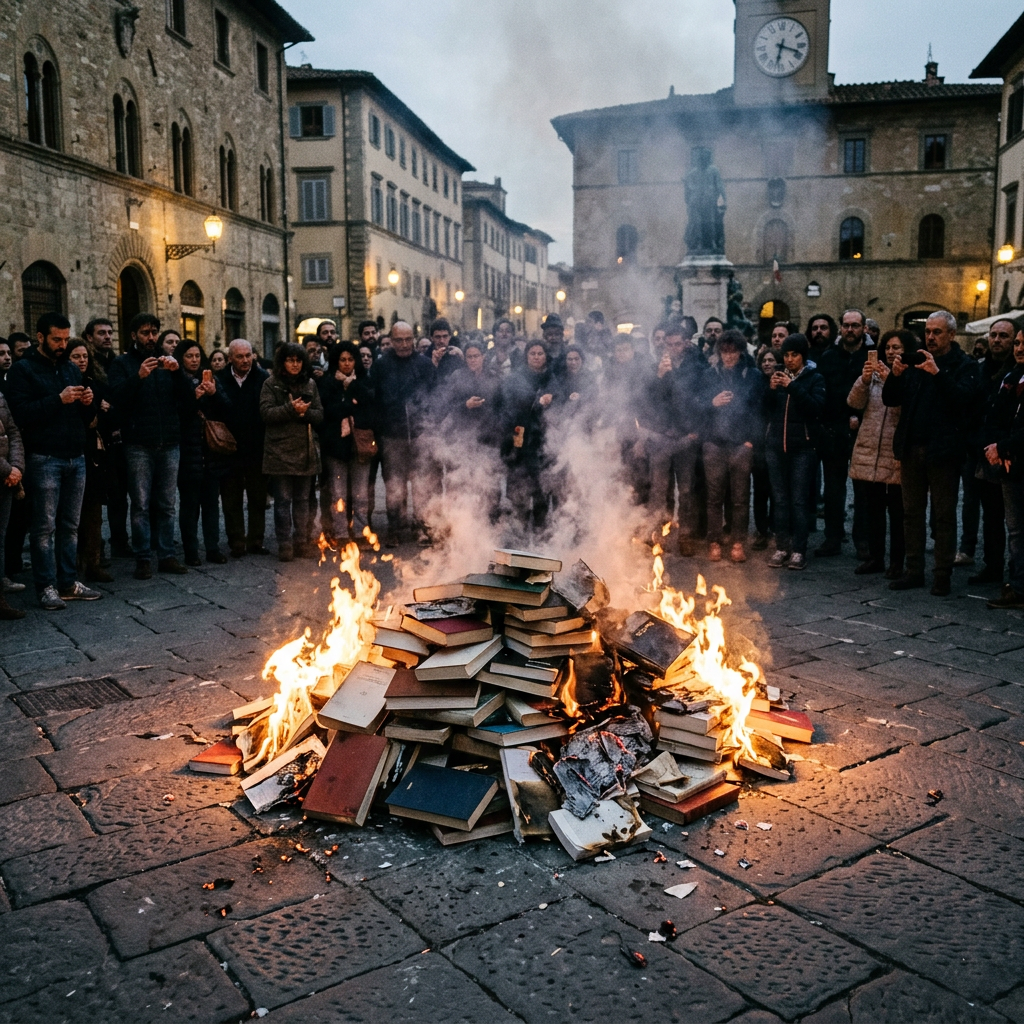
The Spectacle of Book Burning
While censorship often operates quietly through administrative red tape, it historically erupts into public spectacle during periods of authoritarian consolidation. The most infamous modern example occurred on May 10, 1933, when Nazi-aligned student groups burned tens of thousands of books by Jewish, leftist, and pacifist authors across German university towns.
1933 Nazi book burning in Berlin. Kilde: NS-Dokumentationszentrum München
This public purging aimed not merely to destroy paper, but to signal the systematic eradication of intellectual opposition—a grim realization of playwright Heinrich Heine’s 1823 warning: “Where they burn books, they will in the end burn human beings too.”
Book Banning in US Schools and Libraries
In the United States, censorship evolved through legal and cultural debates over moral purity and community standards. The 1873 Comstock Act initially criminalized mailing “obscene” or “immoral” literature, setting a precedent for state-sanctioned restrictions. Over the 20th and 21st centuries, the primary battleground shifted to public school curricula and municipal libraries.
The constitutional boundary for educational censorship was defined in the landmark 1982 Supreme Court decision Island Trees Union Free School District v. Pico. The Court ruled that while school boards have discretion over curriculum, they cannot remove books from school library shelves simply because they disagree with the political or social ideas expressed in them, affirming First Amendment protections for student readership.
Despite legal precedents, book challenges in US public schools continue to surge. Challengers frequently cite parental rights, age-appropriateness, and moral safeguards, whereas civil liberties organizations highlight that removals disproportionately target literature exploring LGBTQ+ themes, racial injustice, and historical trauma. The shift from medieval pyres to modern school board hearings demonstrates that while the mechanisms of censorship evolve, the fundamental contest over who controls access to ideas remains constant.
Leave a Reply