Les combats de coqs entre pédés
Sous les dorures du salon,
Dans l’ombre douce des tentures,
On aiguise le mot, le ton,
On prépare les égratignures.
De beaux coqs aux ergots de soie,
Bavards, cruels et parfumés,
S’affrontent pour un brin de voix,
Dans un combat d’orgueil vanter.
On s’écharpe du bout du gant,
Un mot d’esprit devient blessure,
Un regard trop froid, foudroyant,
Ébrèche l’élégante armure.
Pour un salon, pour une reine,
Pour le patronage d’un soir,
Ils étalent leur noble haine
Devant le cuivre du miroir.
L’un sort son livre, l’autre son fer,
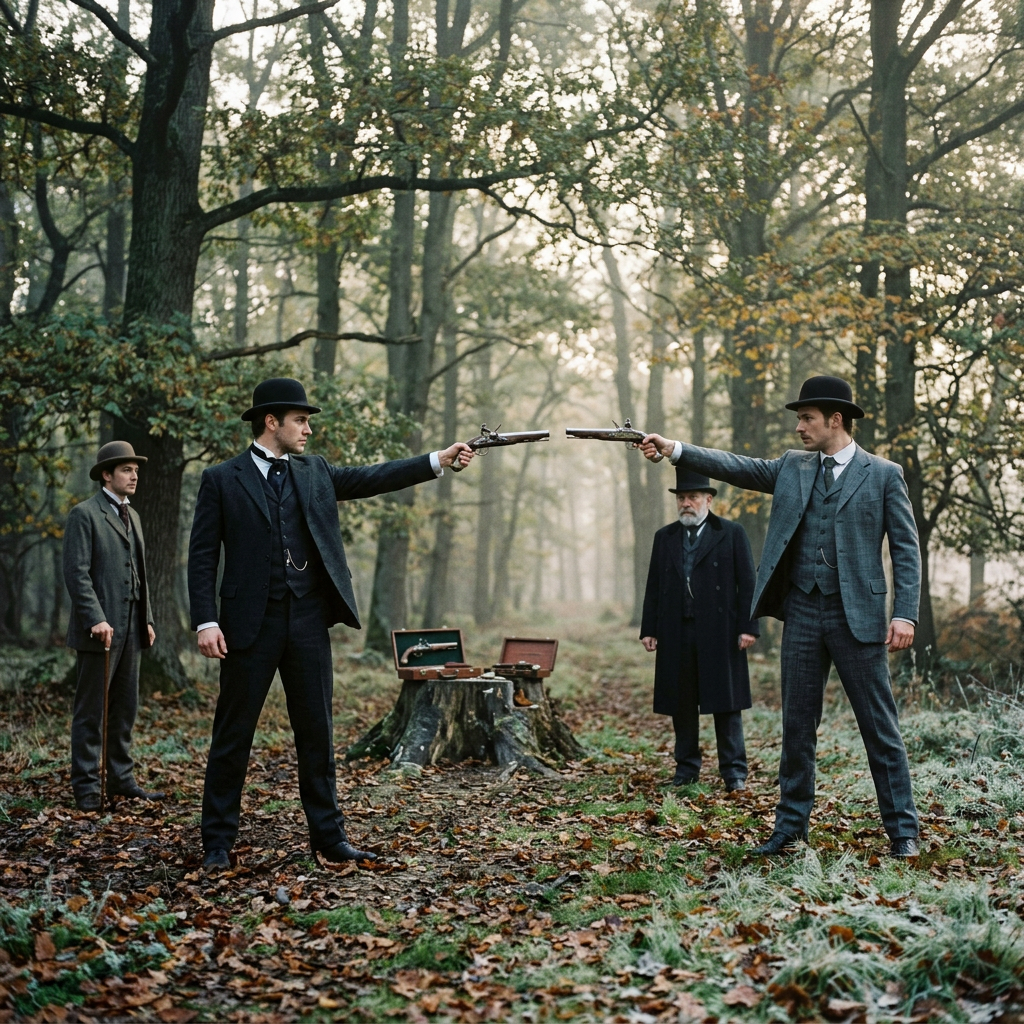
Pistolets braqués dans le bois,
On feint d’affronter son enfer
Pour le bon plaisir des bourgeois.
Puis l’on rentre au lit, sans blessure,
Sauf au cœur, bien sûr, sous le fard,
Où coule la même fêlure
D’être les rois du même art.
____________________________
les combats de coqs entre pédés
Throughout history, the social geography of same-sex desire—particularly within urban elites—has often produced intense intra-community rivalries. Far from forming a unified front, homosexual subcultures have historically fractured over aesthetics, class status, generational succession, and the precious currency of social legitimacy. In the slang of late-twentieth-century American subcultures, these public performative skirmishes were colloquially dubbed “fagfights,” waged under the watchful eyes and protective patronage of prominent salon hostesses and aristocratic women—figures historically termed “fag hags.”
Long before this American lexicon emerged, the high-stakes world of Fin-de-Siècle Paris and Belle Époque society provided the definitive masterclass in these theatrical collisions. In his exhaustive biography, Marcel Proust, Jean-Yves Tadié documents how the young Proust navigated a treacherous socio-literary landscape filled with acidic rivalries, public slurs, fragile egos, and actual blood sport. Within the glittering drawing rooms of the Faubourg Saint-Germain, Proust’s identity, literary ambition, and homosexual liaisons were forged in the crucible of fierce rivalries against fellow gay writers and aesthetics—rivalries mediated, engineered, and shielded by powerful aristocratic women.
I. The Architecture of the Salon: Hostesses, Matronage, and Gay Rivalry
To understand the social and physical conflicts involving Marcel Proust, one must first grasp the ecology of the Belle Époque salon. In late nineteenth-century Paris, the salon served as an unofficial legislative body for culture and prestige. Excluded from formal political power, elite women—duchesses, princesses, and wealthy bourgeois hostesses—exerted formidable authority by curating these intellectual spaces.
For gay men of the era, these hostesses offered a sanctuary of implicit tolerance. Hostesses such as Madeleine Lemaire, the Comtesse Greffulhe, Geneviève Straus, and the Comtesse de Chevigné “adopted” talented young homosexuals. They provided these men with social standing, access to elite networks, and protection from the legal and moral taboos surrounding inversion. In return, the hostesses demanded absolute loyalty, wit, and conversational entertainment.
                               ┌────────────────────────────────┐
                               │     The Salon Hostesses        │
                               │ (Lemaire, Straus, Chevigné)    │
                               └───────────────┬────────────────┘
                                               │
                                Provides Patronage & Social Shielding
                                               │
                                               ▼
         ┌────────────────────────────────────────────────────────────────────────┐
         │                  The Arena of Intra-Community Friction                 │
         │                                                                        │
         │   Marcel Proust  ◄──────►  Jean Lorrain    (The Duel of Meudon, 1897)   │
         │   Marcel Proust  ◄──────►  Robert de Montesquiou (Subjugation & Mockery)│
         │   Marcel Proust  ◄──────►  Jean Cocteau    (Generational Succession)   │
         └────────────────────────────────────────────────────────────────────────┘
This arrangement inevitably turned the salon into an arena for fierce competition. Homosexual men competed for the affection, favor, and literary backing of the same powerful women. Because these men shared an open secret—their hidden sexual identity—their rivalries were doubly charged. The threat of exposure or social ostracism became a weapon deployed to destroy a rival’s standing. Far from a brotherhood, the homosexual literary sphere was characterized by performative cruelty, hyper-sensitivity to slights, and territorial combat.
II. The Physical Combat: Proust vs. Jean Lorrain (1897)
The most explicit example of a combat de coqs escalating into physical violence occurred in February 1897 between Marcel Proust and the decadent author Jean Lorrain.
Jean Lorrain (the pseudonym of Paul Duval) was an openly gay, provocatively decadent critic and novelist. Unlike Proust, who exercised discretion regarding his private life, Lorrain flaunted his illicit adventures in the working-class underworld of Paris. Lorrain was notorious for his acid-dipped columns in Le Journal, where he regularly mocked rival writers, particularly young aesthetics trying to climb the social ladder.
Today I Found Out
The conflict erupted following the publication of Proust’s debut book, Les Plaisirs et les Jours (1896). The book featured an extravagant preface by Anatole France and expensive illustrations by Madeleine Lemaire—Proust’s crucial social patroness. Lorrain published a scathing review. Beyond panning the prose, Lorrain launched a direct personal attack on Proust’s sexuality and his romantic relationship with Lucien Daudet, the handsome young son of novelist Alphonse Daudet.
Today I Found Out
“M. Marcel Proust has succeeded in getting himself sponsored by M. Anatole France, who owes this favor to Mme Madeleine Lemaire… All this for a collection of tiny, elegant, pretentious, and precious snippets, written to flatter the vanity of a small circle of aristocrats and young dandies.” — Jean Lorrain, Le Journal
Lorrain’s insinuation went beyond literary critique; it directly linked Proust’s social advancement to his romantic affair with Lucien Daudet. In the homophobic atmosphere of the 1890s—amplified by the contemporary trial and imprisonment of Oscar Wilde in England—such a public accusation posed a catastrophic threat to Proust’s social standing and family honor.
Driven to defend his reputation, the frail, asthmatic twenty-five-year-old Proust did what honor dictated: he challenged Lorrain to a duel.
Today I Found Out
| Axis of Conflict | Marcel Proust | Jean Lorrain |
|---|---|---|
| Social Strategy | Discreet, aristocratic salon integration | Provocative, decadent, sensationalist |
| Patronage | Protected by Madeleine Lemaire & Mme Straus | Independent tabloid commentator |
| Primary Weapon | Precision wit & aristocratic social leverage | Libelous journalism & public exposure |
| Dueling Outcome | Honor restored through composure under fire | Backed down after exchanging shots |
On February 5, 1897, at the Tourne-Bride in the forest of Meudon, the two men faced each other in the cold rain, armed with pistols. The composer Reynaldo Hahn—Proust’s former lover and lifelong companion—served as one of Proust’s seconds. Despite his fragile health, Proust displayed remarkable composure. Two shots were fired; both missed, striking the mud. Honor was declared satisfied.
Today I Found Out+ 1
Though no blood was shed, the duel achieved its social goal: Proust proved he was not a passive victim and successfully silenced Lorrain’s public attacks. The incident demonstrated the paradox of the era: two homosexual men dueling over a public accusation of homosexuality to maintain their standing in high society.
Today I Found Out
III. Psychological Warfare: Proust and Count Robert de Montesquiou
If the duel with Lorrain was a sudden physical clash, Proust’s long relationship with Count Robert de Montesquiou-Fézensac was a decades-long psychological campaign.
Count Robert de Montesquiou was the undisputed king of Belle Époque dandyism. An aristocrat, poet, collector, and unrepentant narcissist, he served as the inspiration for Joris-Karl Huysmans’s Des Esseintes in À rebours and ultimately for Proust’s own Baron de Charlus in À la recherche du temps perdu. Montesquiou was also openly, grandiosely homosexual, though he cloaked his desires in an elaborate aesthetic of aristocratic mysticism and platonic idealization.
                  ┌─────────────────────────────────────────┐
                  │       Count Robert de Montesquiou       │
                  │ (Arrogant, High-Aristocratic Patron)    │
                  └────────────────────┬────────────────────┘
                                       │
                         Initial Mentorship & Dominance
                                       │
                                       ▼
                  ┌─────────────────────────────────────────┐
                  │              Marcel Proust              │
                  │ (Deferential Student -> Literary Master) │
                  └────────────────────┬────────────────────┘
                                       │
                     Subversive Reversal via *La Recherche*
                                       │
                                       ▼
                  ┌─────────────────────────────────────────┐
                  │    Baron de Charlus (Fictionalization)  │
                  │ (Exposes Montesquiou's Hidden Frailties) │
                  └─────────────────────────────────────────┘
Proust met Montesquiou in 1893. Recognizing Montesquiou’s influence in the highest echelons of society, Proust initially assumed the role of a sycophantic disciple. He lavished the Count with extravagant praise, submitting to Montesquiou’s tyrannical mood swings and humiliation. Montesquiou used Proust as an errand boy and intellectual plaything, regularly mocking Proust’s bourgeois origins and Jewish ancestry.
As Tadié documents, Proust quietly conducted a psychological counter-offensive. While feigning total subservience in his correspondence, Proust carefully studied Montesquiou’s grandiosity, hypocrisies, and secret sexual encounters with working-class men.
The balance of power shifted as Proust transformed from a social butterfly into a literary giant. Montesquiou, whose own poetry was increasingly dismissed as hollow, watched with envy as Proust gained critical acclaim. The ultimate blow came with the publication of Sodome et Gomorrhe. In the character of Baron de Charlus, Proust captured Montesquiou’s genius, speech patterns, and aristocracy, while also exposing his grotesquerie, vulnerability, and tragic downfall.
Montesquiou realized he had been immortalized not as a tragic lord, but as a pathologized case study. Proust defeated his former mentor not with a pistol, but through literary immortalization.
IV. Generational Rivalry: Proust and Jean Cocteau
In his later years, bound to his cork-lined bedroom by severe asthma, Proust engaged in a subtle generational duel with a younger homosexual prodigy: Jean Cocteau.
When the young, brilliantly charismatic Cocteau burst onto the Parisian scene in the 1910s, he quickly became the darling of high-society hostesses. He captivated figures like the Comtesse de Chevigné—one of Proust’s primary inspirations for the Duchesse de Guermantes—who found Cocteau’s dazzling youth a refreshing alternative to Proust’s neurotic demands.
Literary Hub
                     ┌───────────────────────────────────┐
                     │    The Salon of Mme de Chevigné   │
                     └─────────────────┬─────────────────┘
                                       │
                    ┌──────────────────┴──────────────────┐
                    │                                     │
                    ▼                                     ▼
      ┌──────────────────────────┐           ┌──────────────────────────┐
      │      Marcel Proust       │           │       Jean Cocteau       │
      │  - Aging, reclusive      │           │  - Young, vibrant        │
      │  - Exhaustive prose      │  VS.      │  - Avant-garde, swift    │
      │  - Viewed as "tedious"   │           │  - Steals hostesses'     │
      │    by hostesses          │           │    affections            │
      └──────────────────────────┘           └──────────────────────────┘
Cocteau sought out Proust, visiting his cork-lined bedroom on the Boulevard Haussmann. Cocteau admired Proust, but he also strove to surpass him, seeking to position himself as the premier avant-garde voice of modern French literature. Proust, while fascinated by Cocteau’s energy, viewed him with a mixture of amusement and patronizing skepticism. Proust regarded Cocteau as overly eager, shallow, and desperate for quick applause.
Their rivalry played out through social hostesses and literary maneuvering. Cocteau attempted to show his support by promoting Du côté de chez Swann, but his patronizing tone irritated Proust. In private correspondence, Proust regularly dismantled Cocteau’s poetic pretensions, mocking his need for public display.
When Mme de Chevigné famously declared that Proust bored her to death with his endless scribbles, favoring Cocteau’s lively presence instead, the generational shift was clear. Proust responded by embedding these social dynamics into À la recherche, capturing the endless cycle where established figures are supplanted by younger rivals in the fickle affections of salon hostesses.
Literary Hub
V. The Legacy of the Combats de Coqs
The conflicts documented in Jean-Yves Tadié’s biography reveal that the homosexual subcultures of late-nineteenth and early-twentieth-century Paris were far from harmonious. Forced to operate within a society that criminalized or socially destroyed visible queer identity, these men turned their competitive drives inward.
The rivalries between Proust and Lorrain, Montesquiou, and Cocteau were fought over tangible stakes: social survival, artistic legacy, and the patronizing affection of powerful women. These aristocratic hostesses were not passive observers; they fostered, managed, and exploited these clashes for their own intellectual entertainment.
Today I Found Out
Whether settled with dueling pistols at dawn in the forest of Meudon or through character caricatures published in multi-volume novels, these historical clashes demonstrate how marginalized groups historically navigated power, vanity, and self-preservation within elite society.
Today I Found Out
Explore related aspects of Proust’s life and literary rivalries:
Analyze the real-life inspirations for the Baron de Charlus
Examine how salon hostesses controlled Fin-de-Siècle Paris
Leave a Reply