— Adam Donaldson Powell

Count Robert de Montesquiou (1897), the quintessential French Belle Époque dandy.
French Aristocracy and Dandyism: From Political Privilege to Aesthetic Individualism
French aristocracy and French dandyism are closely connected through history, yet they represent fundamentally different social and cultural ideals. Aristocracy was a political and legal ruling class whose authority rested on birth, hereditary privilege, and landownership. Dandyism, by contrast, was a nineteenth-century aesthetic and philosophical movement that emphasized cultivated elegance, personal style, intellectual independence, and ironic detachment. While aristocratic court fashion provided the historical foundation for elite dress, French dandyism emerged only after the decline of aristocratic political power, transforming the symbols of privilege into expressions of individual identity.
Aristocracy under the Ancien Régime
During the seventeenth and eighteenth centuries, particularly under the reigns of Louis XIV and Louis XV, the French aristocracy occupied the highest position in society. Nobles enjoyed legal privileges, controlled vast estates, and dominated the royal court at Versailles. Court life demanded elaborate etiquette and extravagant dress. Powdered wigs, embroidered silk coats, velvet fabrics, lace cuffs, jeweled accessories, and brightly colored garments served as visual indicators of rank and proximity to the king.
However, this courtly fashion should not be confused with dandyism. Aristocratic appearance at Versailles was governed by strict rules established by the monarchy. Displaying luxury was not an act of personal expression but a requirement of court culture. Conformity, rather than individuality, defined aristocratic dress.
The French Revolution and the Fall of Noble Privilege
The French Revolution (1789–1799) fundamentally transformed French society. Noble titles, feudal privileges, and the political authority of the aristocracy were abolished. During the Revolution’s most radical years, conspicuous displays of aristocratic luxury could even lead to suspicion, imprisonment, or execution by guillotine.
Following the Terror, during the Directory (1795–1799), a group of fashionable young men known as the Les Incroyablesadopted exaggerated versions of pre-revolutionary aristocratic clothing. Oversized lapels, elaborate cravats, and eccentric tailoring became subtle political statements against revolutionary egalitarianism. Although highly theatrical, their style is widely regarded as an important precursor to nineteenth-century French dandyism because it transformed clothing into a conscious expression of cultural and political identity.
The Birth of French Dandyism
French dandyism emerged during the Restoration and the July Monarchy (1814–1848). Although the monarchy briefly returned, the traditional nobility no longer held exclusive economic or political dominance. Industrialization and capitalism had elevated the bourgeoisie into France’s most influential social class.
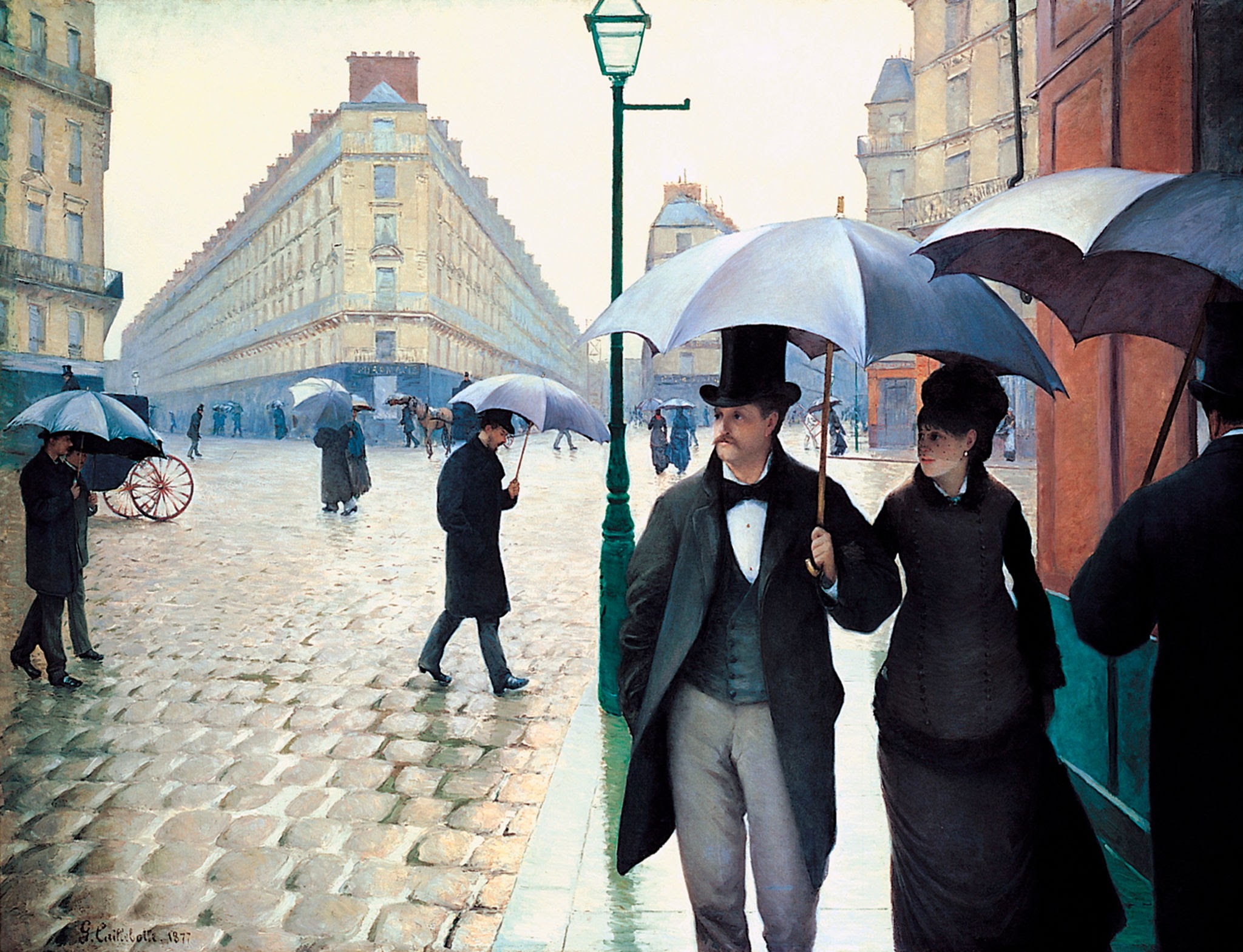
Inspired by the refined tailoring of the English dandy Beau Brummell, fashionable French gentlemen developed a distinctly modern style. Instead of the colorful extravagance of the ancien régime, the dandy favored dark wool suits, impeccable tailoring, immaculate white shirts, perfectly tied cravats, polished boots, and restrained elegance. Luxury became subtle rather than ostentatious.
Yet dandyism was more than clothing. It represented an attitude toward modern society. The dandy cultivated self-discipline, wit, intellectual superiority, and emotional detachment. Through impeccable appearance and refined manners, he rejected what he regarded as the materialism, mediocrity, and conformity of the rising bourgeois middle class.
The Belle Époque: The Golden Age of Dandyism
French dandyism reached its cultural height during the Second Empire and the Belle Époque (1852–1914). Writers and artists transformed the dandy from a fashionable gentleman into a philosophical ideal.
Charles Baudelaire described the dandy as the “hero of modern life,” arguing that true elegance reflected spiritual discipline rather than mere wealth. For Baudelaire, the dandy sought beauty, refinement, and self-mastery while remaining independent from popular opinion and democratic mediocrity.
Jules Barbey d’Aurevilly further developed this ideal by portraying dandyism as an aristocracy of character rather than birth.
One of the most celebrated historical examples was Count Robert de Montesquiou, an aristocrat whose extraordinary refinement made him the quintessential Belle Époque dandy. He devoted immense attention to dress, spent hours arranging his cravats, collected rare works of art, and cultivated an image of exquisite aesthetic perfection. In his life, inherited noble status merged with the consciously artistic identity of the modern dandy.
Charles Baudelaire and the Philosophy of the Dandy
No figure shaped the intellectual understanding of French dandyism more profoundly than the poet and art critic Charles Baudelaire. In his influential essay The Painter of Modern Life (Le Peintre de la vie moderne, 1863), Baudelaire argued that dandyism was far more than refined clothing or fashionable manners. Rather, it was an ethical and aesthetic discipline—a deliberate way of living that transformed one’s entire existence into a work of art.
Baudelaire described the dandy as “the last spark of heroism amid decadence,” a person who cultivates beauty, elegance, and self-control in an increasingly democratic and materialistic society. For him, true dandyism required constant self-mastery. The dandy remained calm, detached, and composed under all circumstances, refusing to display excessive emotion or submit to the pressures of public opinion.
Unlike the aristocrat, whose social status depended upon inherited privilege, the dandy earned distinction through personal cultivation. Impeccable dress, graceful manners, intellectual sophistication, and disciplined behavior became visible expressions of an inner ideal. Elegance was therefore not an end in itself but evidence of a carefully constructed identity.
Baudelaire also emphasized that authentic dandyism rejected vulgar displays of wealth. Although many dandies possessed considerable financial resources, luxury was meaningful only when exercised with restraint and perfect taste. Simplicity, precision, and impeccable tailoring conveyed refinement more effectively than excessive ornamentation. This principle explains why the nineteenth-century dandy abandoned the brightly colored silks and embroidered garments of the ancien régime in favor of dark, perfectly fitted suits and meticulously tied cravats.
Most importantly, Baudelaire viewed dandyism as a form of quiet resistance against bourgeois society. As industrialization and capitalism encouraged conformity, commercial success, and practical utility, the dandy asserted that beauty, style, wit, and individuality possessed value independent of economic productivity. In this sense, dandyism became an artistic protest against modern mass culture. The dandy’s life itself became a carefully composed aesthetic performance, demonstrating that personal excellence could be cultivated even in an age increasingly defined by commerce and democracy.
Baudelaire’s interpretation elevated dandyism beyond fashion into one of the defining cultural philosophies of nineteenth-century France. His writings continue to influence modern discussions of style, identity, aesthetics, and self-fashioning, making him the movement’s most important philosophical theorist.
The Decline of Aristocracy and Dandyism
The First World War marked the decline of both traditional aristocratic society and classical dandyism. Economic hardship, democratization, and industrial mass production weakened Europe’s hereditary elite. Practical ready-to-wear clothing gradually replaced bespoke tailoring as the standard for men’s fashion.
Although elements of dandyism survived among artists, writers, and later subcultures, it ceased to exist as a significant social movement. By the mid-twentieth century, both aristocracy as a political force and dandyism as a dominant cultural ideal had largely disappeared from everyday life.
Aristocracy and Dandyism Compared
Although they shared an appreciation for elegance, French aristocracy and French dandyism differed fundamentally in their origins and purposes.
| Dimension | French Aristocracy | French Dandyism |
| Source of status | Birthright, hereditary titles, landownership | Individual taste, wit, grooming, and cultivated poise |
| Peak era | Seventeenth to late eighteenth century (before 1789) | Mid to late nineteenth century (1830s–1890s) |
| Fashion | Velvet, silk, powdered wigs, lace, bright colors | Dark tailored suits, understated luxury, immaculate cravats |
| Social purpose | Preserve hereditary rank and loyalty to the monarchy | Assert artistic individuality and reject bourgeois conformity |
| Guiding ideal | Political privilege through noble birth | Personal excellence through aesthetic self-creation |
Conclusion
French dandyism did not replace aristocracy but reinterpreted its visual language after the old political order had collapsed. Where aristocrats dressed magnificently because society demanded it, dandies dressed impeccably as a deliberate act of self-definition. Their elegance was not simply a sign of wealth but a philosophical statement against conformity and the values of mass society.
The evolution from aristocratic court dress to nineteenth-century dandyism illustrates one of the most significant cultural transformations in modern France: the shift from inherited privilege to the cultivation of identity through style, intellect, and artistic individuality.

Leave a Reply