Pip: osoparavos.com — where the questions are large, the sentences are careful, and nobody is in a hurry to get to the point. That’s a compliment.
Mara: Adam Donaldson Powell is the writer behind today’s episode, and the territory is ambitious: what attention does to memory, what memory does to art, and what art does to the people who encounter it across time. Let’s start with the recovery of attention itself.
The Recovery of Attention
Mara: The central claim here is that attention isn’t passive — it’s the engine that makes experience real in the first place. The question the essay presses is whether we’ve actually lived what we’ve lived, or only passed through it.
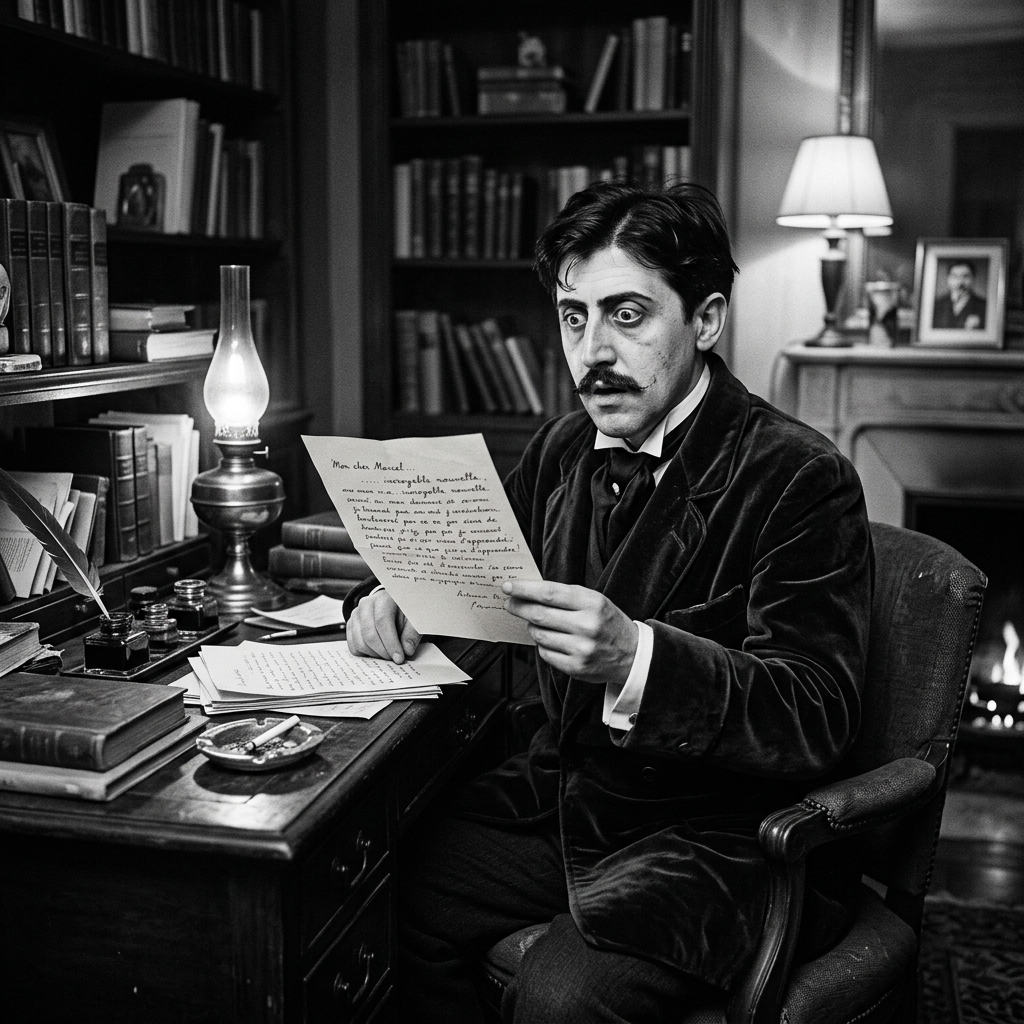
Pip: And the answer leans on Proust, who turns out to be less a novelist than a demonstration. The essay puts it directly: “Proust teaches us that we have not fully experienced what we have lived until attention awakens us to it.”
Mara: So the upshot is that experience has a second layer, and most of us are living in the first one. The work of art — and of reading — is to break through to the second.
Pip: What’s interesting is the company the essay keeps. Proust doesn’t stand alone here; Montaigne, Ruskin, Colette, and Wilde are all named as companions, each teaching a different mode of perception. Montaigne sharpens honesty about our own contradictions. Ruskin demands longer looking. Colette makes ordinary sensation luminous.
Mara: And the essay is explicit that these writers don’t merely inform — they transform. “After reading Colette, we may perceive the physical world more carefully. After reading Ruskin, we may look longer at architecture, craftsmanship, and landscape.”
Pip: There’s a generous reframing of criticism buried in here too. The essayist isn’t a judge standing above the work.
Mara: Right — the essay calls it something closer to gratitude. Writing about literature as an act of conversation, not verdict.
Pip: The second half of the piece widens the frame considerably. Creation isn’t a series of finished objects; it’s a single continuing effort across a lifetime. Failed poems, abandoned paths — none of it is waste.
Mara: The essay’s phrase for this is striking: “The immature work is not the enemy of the masterpiece. It is its ancestor.” And the cathedral metaphor follows from that — each generation adds its labor without seeing the completed structure.
Mara: Which brings the whole thing to its closing image: the unfinished symphony. Not incomplete because something is missing, but unfinished because something is still becoming.
Pip: Humanity itself, apparently, is the thing still becoming — which is either terrifying or reassuring depending on the week you’re having.
Mara: The attention, the essay insists, is what keeps it alive. That’s the thread running through everything here.
Pip: Memory, art, time — it all loops back to what we’re willing to sit with long enough to actually see.
Pip: Deep attention as the one thing that makes experience stick. That’s a lot to carry out of a single episode.
Mara: It’s a question worth returning to — which, fittingly, is exactly what the essay says great works ask us to do. More next time.
Leave a Reply