— Adam Donaldson Powell + AI
Oscar Wilde: The Martyr of Wit
Part I — The Man Who Could Not Stop Being Brilliant
Introduction
This essay examines the tragic relationship between Oscar Wilde’s temperament, his wit, and the consequences of his choices. It does not seek to diminish or excuse the profound injustice of his persecution.
Wilde was convicted under laws that criminalized homosexual acts between men, and his imprisonment was the result of a society whose legal and moral structures were profoundly hostile toward same-sex relationships. The cruelty of the Victorian system, the prejudice surrounding the trials, and the personal destruction inflicted upon Wilde cannot be attributed to his character or his decisions alone.
The argument that follows concerns a different question: why did a man of extraordinary intelligence repeatedly choose confrontation, irony, and self-expression even when silence might have protected him? Wilde’s tragedy lies not in the fact that he challenged an unjust society, but in the fact that his greatest gift—his inability to abandon wit, beauty, and intellectual defiance—also made him vulnerable within that society’s machinery of punishment.
To understand Wilde fully requires holding both truths simultaneously: he was wronged, and he was human; he was a victim of injustice, and he was also an architect of his own dramatic destiny.
There are men who lie to save themselves.
There are men who tell the truth because they possess courage.
And then there are rare men who answer every question as though it were an invitation to perform.
Oscar Wilde belonged to that last and most dangerous category.
The tragedy of Wilde’s life was not simply that he lived in a society that criminalized his desires, nor merely that he was persecuted by a rigid and hypocritical moral order. Those facts are undeniable. But his catastrophe contains another, more personal dimension: when confronted with danger, Wilde was almost constitutionally incapable of becoming ordinary. He could not retreat into silence, disguise himself in conventional language, or surrender the brilliant self that had made him famous.
The courtroom demanded caution.
Wilde answered with wit.
The courtroom demanded strategy.
Wilde offered paradox.
The courtroom demanded survival.
Wilde remained Oscar Wilde.
His downfall was therefore not only the tragedy of a persecuted man. It was the tragedy of a man whose greatest gift became inseparable from his destruction.
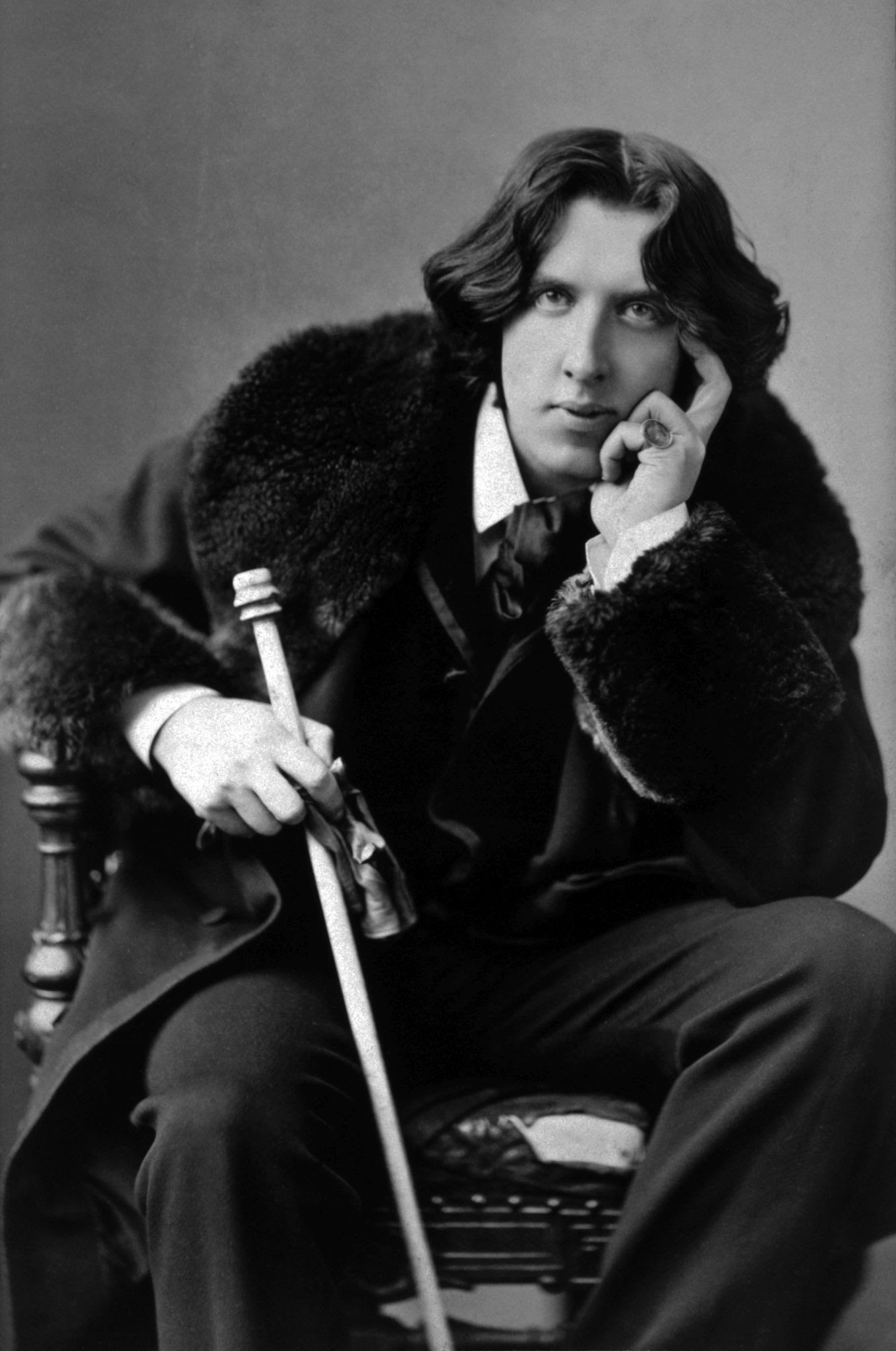
In late Victorian London, Wilde was the supreme master of social enchantment. He entered a room and transformed it. His velvet jackets, extravagant gestures, and carefully cultivated aesthetic persona made him one of the most recognizable figures of the age. To many, he was merely the perfect dandy: amusing, fashionable, theatrical, and slightly absurd.
But this interpretation misses the intellectual seriousness beneath the decoration.
For Wilde, wit was not ornament.
It was a philosophy.
It was his way of understanding reality.
The Victorian world was built upon declarations of seriousness: serious morality, serious religion, serious industry, serious respectability. Wilde responded by questioning whether seriousness itself had become a form of intellectual laziness. He saw a society obsessed with appearances while pretending to worship truth. His weapon against this contradiction was irony.
Where Victorian society proclaimed fixed moral certainties, Wilde introduced paradox.
Where society celebrated duty and utility, Wilde defended imagination and beauty.
Where society insisted that life should instruct art, Wilde reversed the relationship and argued that art shapes our perception of life itself.
His famous statement in the preface to The Picture of Dorian Gray—“There is no such thing as a moral or an immoral book. Books are well written, or badly written”—was not simply a defense of artistic freedom. It was an attack upon the assumption that literature existed primarily as a servant of social morality.
Wilde understood that art was dangerous precisely because it allowed human beings to imagine possibilities beyond the boundaries imposed upon them.
The same principle governed his conversation.
An epigram was never merely a joke. It was a small intellectual explosion.
“The only way to get rid of a temptation is to yield to it.”
“Work is the curse of the drinking classes.”
“Experience is simply the name we give our mistakes.”
Such statements delighted audiences because they were entertaining. But beneath the laughter was rebellion. Wilde had discovered that a beautifully constructed sentence could pass through the defenses of society more easily than an argument. A sermon invites resistance. A paradox invites reflection.
His wit disarmed people before revealing that they had been challenged.
The theater made Wilde famous because it transformed his private philosophy into public entertainment.
In Lady Windermere’s Fan, A Woman of No Importance, An Ideal Husband, and especially The Importance of Being Earnest, Wilde dissected the assumptions of the British upper classes with surgical elegance.
The brilliance of The Importance of Being Earnest lies in its refusal to respect conventional priorities. Names, inheritances, baptisms, and marriages—institutions treated by Victorian society as solemn foundations—become absurd theatrical devices. Meanwhile, trivial objects such as cucumber sandwiches receive the gravity normally reserved for moral crises.
Wilde understood that comedy could reveal what seriousness concealed.
His laughter was not gentle.
It was precise.
The society that applauded him, however, misunderstood the nature of the attack. London admired being entertained by Wilde’s rebellion as long as the rebellion remained decorative. The aristocracy enjoyed watching itself mocked, provided that the mockery arrived elegantly dressed and accompanied by champagne.
Wilde believed, perhaps fatally, that brilliance could protect him.
For years, it did.
His enemies found him amusing. His admirers found him irresistible. His confidence grew. The drawing room became his kingdom, and conversation became his battlefield.
But a battlefield remains a battlefield even when the weapons are beautiful.
The great irony of Wilde’s life is that he understood hypocrisy perfectly—except when it surrounded himself.
He knew that Victorian society tolerated eccentricity only until eccentricity threatened power.
He knew that the same people who laughed at his jokes could turn against him.
He knew that reputation was fragile.
Yet when the decisive moment arrived, knowledge did not save him.
Temperament defeated intelligence.
In 1895, Wilde stood at the summit of his career. An Ideal Husband and The Importance of Being Earnest were both triumphs. London theater audiences adored him. His name represented sophistication, brilliance, and modernity.
At the same time, his private life had become increasingly vulnerable.
His relationship with Lord Alfred Douglas (“Bosie”), passionate and turbulent, placed him directly in conflict with Bosie’s father, John Sholto Douglas, the Marquess of Queensberry. Queensberry was aggressive, vindictive, and determined to destroy Wilde.
On February 18, 1895, Queensberry left a card at Wilde’s club accusing him of “posing somdomite” (a misspelling of “sodomite”).
Wilde’s friends urged him to ignore the insult.
They advised caution.
They advised retreat.
They advised silence.
All of them understood something Wilde did not: the courtroom would not operate according to the rules of the drawing room.
But Wilde believed that truth, intelligence, and eloquence would prevail.
He made the fatal calculation that his greatest strength would remain his greatest defense.
He was about to discover the difference between being brilliant among friends and being brilliant before enemies.
The stage was no longer a theater.
The audience was no longer amused.
And the man who had spent his life mastering the art of the perfect reply was about to meet the one opponent against whom wit alone could not triumph.
___________________________
Part II — The Drawing Room Meets the Old Bailey
Wilde’s great mistake was not that he underestimated his enemies.
He understood Queensberry perfectly. He knew the man was crude, violent, and socially inferior to the circles in which Wilde moved. The mistake was deeper: Wilde believed that intelligence and refinement possessed a moral authority that even the law would recognize.
He assumed the courtroom would become another drawing room.
He imagined that a gentleman armed with wit could defeat a gentleman armed with aggression.
But Queensberry did not enter the conflict seeking elegance. He entered seeking destruction.
And the law, unlike society, had no obligation to admire the performance.
When Wilde decided to prosecute Queensberry for criminal libel, many of his friends were horrified. They understood the danger immediately.
A successful libel action would require Wilde to prove that Queensberry’s accusation was false. To do so, however, would open the door to an examination of Wilde’s private relationships. Queensberry’s lawyers would not merely discuss manners or literature. They would investigate Wilde’s intimate life and present evidence designed to transform public fascination into public condemnation.
Wilde was warned.
He was advised to withdraw.
He was urged to leave England.
But he believed retreat would represent a surrender not merely of reputation but of identity. To allow Queensberry’s accusation to stand unchallenged seemed intolerable. Wilde, who had spent his career exposing cowardice and hypocrisy, could not bear the idea of appearing afraid.
His pride was understandable.
His calculation was disastrous.
He entered the courtroom believing that the conflict was between civilization and vulgarity.
He failed to see that Queensberry had brought civilization into a place where civilization’s rules no longer applied.
The first trial began in April 1895 at the Old Bailey.
At the beginning, Wilde appeared almost invincible.
The prosecution was led by Edward Carson, one of the most formidable barristers of his generation and, significantly, a former classmate of Wilde’s at Trinity College Dublin. Carson knew his opponent. He knew Wilde’s confidence, his theatrical instincts, and his weakness for the perfect phrase.
The courtroom became a contest between two forms of intelligence.
Carson represented disciplined intelligence: patient, methodical, and strategic.
Wilde represented creative intelligence: spontaneous, brilliant, and unpredictable.
At first, Wilde seemed to dominate.
Carson questioned him about his writings, particularly The Picture of Dorian Gray, attempting to suggest that the novel reflected an immoral imagination. Wilde responded by defending art’s independence from conventional morality.
The exchanges revealed the fundamental difference between them.
Carson was asking:
“What can this statement prove?”
Wilde was answering:
“How beautifully can I respond?”
That distinction would destroy him.
The courtroom was not interested in Wilde’s aesthetic theories. It was not a literary salon. The jury did not need to be impressed; they needed to be convinced.
Yet Wilde continued to treat questions as opportunities for performance.
When asked about the meaning of certain passages in his writing, he responded with characteristic confidence. When challenged about morality, he defended the artist’s independence. When confronted with accusations of impropriety, he often answered with irony rather than caution.
This was not because Wilde lacked intelligence.
It was because intelligence had become inseparable from display.
He had spent decades training himself to transform pressure into brilliance. The very mechanism that had made him successful socially now became dangerous legally.
A comedian can survive a dangerous joke.
A defendant cannot always survive a dangerous answer.
The crucial moment came when Carson moved away from literary questions and toward Wilde’s personal relationships.
He asked about young men with whom Wilde had associated, including Walter Grainger, a young servant at Oxford.
The question was simple.
The danger was enormous.
Carson asked whether Wilde had kissed him.
Wilde replied that he had not, adding that the young man was “a particularly plain boy” and “unfortunately extremely ugly.”
The remark was devastating.
Not because it was a confession.
It was not.
But because it revealed the instinct Carson understood perfectly: Wilde’s first impulse was not to deny desire; it was to make an aesthetic judgment.
He had answered like an artist.
Carson needed an answer from a defendant.
The distinction was fatal.
The implication was clear: the reason given was not moral objection but lack of attraction.
In a single sentence, Wilde had allowed his private aesthetic vocabulary to enter a legal argument.
Carson immediately pressed the point.
Why mention the boy’s ugliness?
Why was appearance relevant?
For perhaps the first time in his public life, Wilde found himself unable to control the atmosphere around him. The laughter that usually followed his remarks did not arrive. The room had changed.
The wit had met silence.
And silence was not a language he spoke easily.
The libel case collapsed soon afterward.
Queensberry’s lawyers prepared to introduce evidence from male prostitutes and other witnesses who would further expose Wilde’s private life. Realizing that conviction was almost inevitable, Wilde withdrew his prosecution.
But the damage was already done.
By initiating the case, Wilde had brought the evidence into motion. The accusation he hoped to destroy had become the foundation of a criminal investigation.
Queensberry was acquitted.
The papers were forwarded to the Director of Public Prosecutions.
On April 6, 1895, Wilde was arrested at the Cadogan Hotel.
The irony was almost unbearable.
The man who had spent his life mocking Victorian hypocrisy was now imprisoned by the very moral system he had challenged.
But there was an even deeper irony.
Wilde had not been destroyed because he lacked intelligence.
He had been destroyed because his intelligence operated according to rules that the courtroom did not recognize.
In society, brilliance could transform danger into admiration.
In court, brilliance could become evidence of arrogance.
The same wit that had made London applaud him now made his opponents fear him.
The weapon had turned inward.
The tragedy of Wilde’s trial is therefore not simply that he lost.
It is that he lost in the most Wildean way possible.
He lost by being himself.
A less gifted man might have survived by lying.
A less proud man might have remained silent.
A more cautious man might have escaped.
But Wilde had built an entire identity around refusing the ordinary, the practical, and the safe. To abandon that identity at the moment of crisis would have felt to him like a deeper defeat than imprisonment.
He could surrender his fortune.
He could lose his reputation.
He could endure humiliation.
But he could not become dull.
The second act of Wilde’s tragedy was about to begin.
The drawing room had become the courtroom.
The courtroom would soon become the prison.
And the man who once conquered London with words would now discover what words could—and could not—do against the machinery of the state.
_________________________
Part III — The Martyr of Wit
The first great irony of Wilde’s imprisonment is that the thing society sought to destroy was the very thing that would preserve him.
The Victorian state could imprison his body.
It could remove his wealth, his reputation, his social position, and his freedom.
But it could not force him to become intellectually ordinary.
That was both his tragedy and his salvation.
After his arrest, Wilde faced two criminal trials under the Criminal Law Amendment Act of 1885. The atmosphere had changed completely. The celebrated playwright who had filled London theaters now stood before the law as a public example.
The man who had once made society laugh was now being used to reassure society that its moral boundaries remained intact.
The cruelty of the proceedings was intensified by the fact that Wilde was not merely judged for actions. He was judged for a way of being: his manner, his friendships, his aestheticism, his refusal to accept conventional definitions of masculinity and respectability.
Yet even in this hostile environment, Wilde remained Wilde.
During the first trial, when asked to explain Lord Alfred Douglas’s phrase, “the love that dare not speak its name,” Wilde gave one of the most remarkable statements ever delivered in a courtroom:
“The love that dare not speak its name in this century is such a great affection of an elder man for a younger man as there was between David and Jonathan, such as Plato made the very basis of his philosophy, and such as you find in the sonnets of Michelangelo and Shakespeare…”
The speech was not merely a defense.
It was an act of transformation.
Wilde took a criminal accusation and placed it within the history of civilization. He invoked Greece, Renaissance art, philosophy, and literature. He attempted to lift the discussion from scandal into the realm of human experience.
His opponents saw immorality.
Wilde saw misunderstood beauty.
The jury could not reach a verdict.
For a brief moment, it seemed possible that his eloquence might again save him.
But the machinery had already begun moving.
A second trial followed.
This time there was no escape.
On May 25, 1895, Oscar Wilde was convicted and sentenced to two years’ imprisonment with hard labor.
The sentence was devastating.
The punishment was designed not merely to confine but to humiliate and break. Victorian prisons operated on the principle that suffering could reform the soul. Isolation, silence, physical labor, and deprivation were intended to strip away identity.
For Wilde, the experience was almost the exact opposite of his former existence.
He had lived through conversation.
Prison imposed silence.
He had lived through beauty.
Prison imposed ugliness.
He had lived through admiration.
Prison imposed anonymity.
The man who had been famous for his voice was reduced to a number: C.3.3.
Yet something unexpected happened.
Wilde’s wit did not disappear.
It changed.
Before prison, Wilde’s wit had been a sword.
It attacked.
It dazzled.
It defeated.
After prison, it became something closer to a lantern.
It illuminated suffering.
The greatest evidence of this transformation is De Profundis, the long letter he wrote during imprisonment to Lord Alfred Douglas.
The Wilde of De Profundis is not the confident figure of the drawing room. He is wounded, reflective, and often painfully honest. He examines his own failures without surrendering his belief in art or individuality.
“I must say to myself,” he writes, “that I ruined myself, and that nobody great or small can be ruined except by his own hand.”
This sentence is remarkable because it avoids both extremes.
Wilde does not claim that society was innocent.
It was not.
Victorian persecution was real, brutal, and unjust.
But Wilde also refuses the easier consolation of portraying himself as completely passive. He recognizes his own responsibility: his vanity, his blindness, his refusal to understand the danger around him.
The man who once believed wit could conquer everything discovered that suffering demanded a different kind of intelligence.
This is perhaps where Proust provides the most fascinating contrast.
Proust and Wilde belonged to the same world of salons, artistic ambition, and social observation. Proust admired brilliance, and he understood the power of personality. But where Wilde displayed himself, Proust concealed himself.
Wilde turned life into performance.
Proust turned life into memory.
Wilde confronted society and expected society to recognize his genius.
Proust studied society and transformed its secrets into art.
One might say that Wilde exposed himself to the world while Proust absorbed the world and hid behind literature.
The difference was not merely temperament.
It was survival strategy.
Proust understood that society rewards charm but punishes vulnerability. Wilde, tragically, believed that charm could protect vulnerability.
His mistake was not that he failed to understand society.
His mistake was believing that society would honor the truths he revealed about itself.
Released from prison in 1897, Wilde left England forever.
He was financially ruined, separated from his children, and abandoned by many of his former friends. He lived under the name Sebastian Melmoth, a figure combining the Christian martyr Saint Sebastian with the wandering hero of Gothic fiction.
The name itself reveals the transformation.
The young Wilde had been the celebrated aesthete.
The older Wilde became the exile.
Yet even at the end, the instinct for wit remained.
Living in poverty in Paris, surrounded by failing health and cheap hotel furnishings, Wilde reportedly looked at his room and remarked:
“My wallpaper and I are fighting a duel to the death. One or other of us has got to go.”
It was the perfect final Wildean sentence.
A joke.
A confession.
A tragedy disguised as elegance.
Oscar Wilde died on November 30, 1900, at the age of forty-six.
The society that condemned him believed it had defeated him.
It had not.
It had confused destruction with victory.
A state can imprison a person.
It cannot imprison meaning.
The judges who sentenced Wilde, the prosecutors who pursued him, and the enemies who celebrated his downfall have all become secondary figures in his story.
Wilde remains.
Not because he was innocent of error.
Not because he was always wise.
Not because his choices were always defensible.
He remains because he embodied a rare and dangerous human possibility: the person who refuses to separate life from art.
His tragedy was that he carried the rules of the drawing room into the courtroom.
His triumph was that, even after the courtroom destroyed him, he continued writing as though the soul remained free.
The final judgment on Wilde is therefore not that he was destroyed by his enemies.
Nor that he was destroyed by himself.
The truth is more tragic.
He was destroyed by the same force that made him extraordinary.
He was unable to stop being brilliant.
And brilliance, when it refuses silence, always carries a price.
____________________________
Epitaph for the Martyr of Wit
They warned you:
a kingdom has prisons,
while an epigram
has only applause.
They told you
that a clever tongue
must sometimes learn
the discipline of silence.
But silence
was never your language.
Others lied
to preserve their lives.
You embroidered the truth
until it shone
too brightly
for judges
who preferred darkness.
Every jest
was another stitch
in the garment
of your undoing.
You saw the scaffold
before you climbed it,
admired its symmetry,
corrected its proportions,
and ascended
as though arriving
at opening night.
No—
you did not make your bed.
You made your stage.
And when the curtain fell,
it became your cell.
History remembers
the sentence.
Literature remembers
the last line.
___________________________
Comment from the author:
Wilde’s tragedy belongs to a larger human tragedy: the distance between reflection and expression. Most people carry within themselves several competing selves—the cautious self, the proud self, the wounded self, the humorous self. Wisdom often consists not in lacking dangerous impulses, but in knowing which impulse deserves silence. Wilde possessed extraordinary self-awareness, yet at crucial moments his instinct for verbal brilliance outran his instinct for self-preservation. His tragedy was not that he did not understand the danger. It was that, when danger arrived, the sentence came before the silence.
____________________________
NB. to readers:
The Number of Trials: My text mentions “After his arrest, Wilde faced two criminal trials…” This is completely correct, but readers often get confused because there were three trials in total:
- Trial 1 (April 3–5, 1895): Criminal Libel (Wilde v. Queensberry — collapsed).Universität zu Köln
- Trial 2 (April 26–May 1, 1895): First Criminal Trial (Regina v. Wilde — ended in a hung jury).
- Trial 3 (May 20–25, 1895): Second Criminal Trial (Regina v. Wilde — conviction).
The “Plain Boy” Context: While Carson led Queensberry’s legal team, Edward Clarke actually led Wilde’s prosecution side. Carson’s relentless cross-examination of Wilde during that first libel trial is what broke Wilde’s stance, leading Clarke to recommend withdrawing the prosecution before Queensberry’s team could call male prostitutes to the stand.
Leave a Reply