Pip: Osoparavos.com this week is doing what poetry does best — making breathing and forgetting feel like the most urgent problems in the world.
Mara: Adam Donaldson Powell brings us two pieces today. One moves through Proust, asthma, and the weight of memory in the body. The other asks what happens to a memory once it leaves you. Let’s start with breath — and what it costs.
Poetic Memory And Breath
Pip: This segment is about what it means to write from inside suffocation — not just physical, but moral and historical.
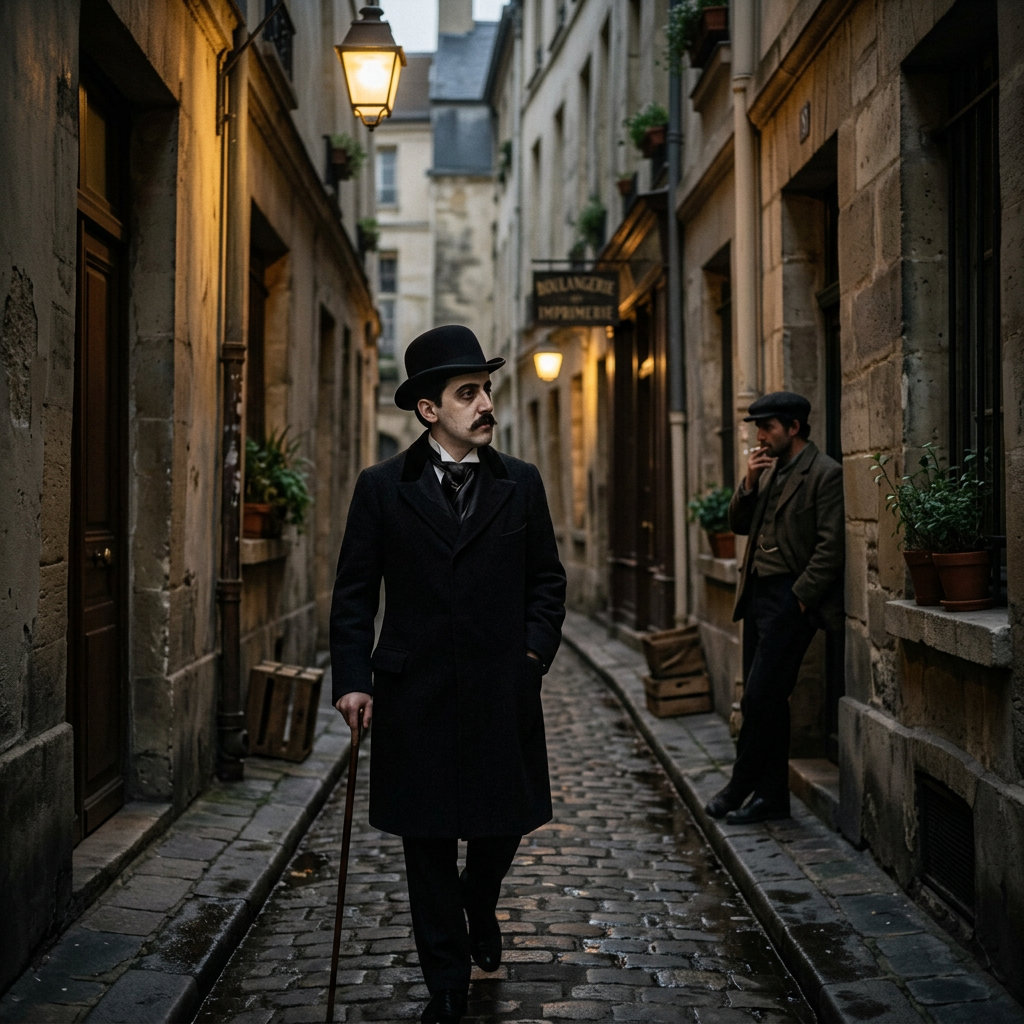
Mara: The poem holds Proust at a threshold throughout, and it names that position directly: “Proust demeure au seuil : entre la mémoire et l’étouffement, entre le monde qui fascine et celui qu’il faut enfin regarder sans détour.”
Pip: So the suffocation isn’t only asthma. It’s the refusal to look clearly — at desire, at complicity, at what the gilded salons were actually covering up.
Mara: Right. The poem tracks three pressures at once: the physical — pollen, dust, a chest that closes — the social, aristocrats whose names spin elegantly while concealing fractures, and the ethical, the shadow of predation that moves through the era not as fragrance but as stain. The refrain “Proust, il ne peut plus respirer” lands differently each time it returns.
Pip: The poem earns its repetition. Each recurrence of that line carries a different kind of air being cut off.
Mara: And it doesn’t let Proust off the hook, but it also doesn’t flatten him. The final line — “Aucun d’eux ne peut respirer” — widens the suffocation outward. Nobody in that world breathes freely.
Pip: Which is where the sentence comes in — long, sinuous, finding truth in the shortage of air itself. The form is doing the argument.
Mara: That’s the pivot into the next piece — because if breath is where memory lives in the body, the question becomes what happens when memory leaves the body entirely.
Exile And Remembrance
Pip: This segment is about the moment a memory stops being yours — and whether that loss is grief or something closer to release.
Mara: “Memories in exile” builds to that question carefully. The key turn arrives early: “But language is not a cabinet. It is weather.”
Pip: So the act of speaking a memory doesn’t preserve it — it disperses it. You open your mouth and you’ve already begun the handover.
Mara: The prose poem follows that dispersal outward. Colors loosen, edges become hospitable, and the speaker can no longer tell whether they’ve given something away or uncovered what was never entirely theirs. Memory, the piece suggests, may have always desired exile.
Pip: There’s something almost consoling in that — though “consoling” feels too tidy for what this piece is actually doing.
Mara: It earns the consolation. The final image is a child pausing at the scent of warm bread, an old man catching the angle of evening light, each believing the feeling entirely their own — “He cannot know that what trembles within him may once have belonged to another mouth, another century, or another tenderness.”
Pip: Memories become climate. Which means the past is still weather — just weather nobody owns anymore.
Pip: Breath and exile — two ways of losing what you thought you were holding.
Mara: Both pieces ask what remains when the body can’t contain it. That question tends to keep going.
____________________________
L’Étouffement de Proust
Poussière sur les tentures,
pollen dans la lumière,
l’air lui-même devient mémoire,
et chaque souffle s’allonge en phrase.
L’asthme compte les secondes
comme une horloge cachée derrière les rideaux ;
la poitrine se ferme
pendant que le monde continue son bal.
Proust, il ne peut plus respirer.
Les beaux jeunes hommes passent,
silhouettes que le regard poursuit
sans jamais pouvoir retenir
autre chose que leur disparition.
Et l’ombre de la pédophile
non comme un parfum, mais comme une souillure,
traverse l’époque,
révélant ce que les dorures taisent.
Proust, il ne peut plus respirer.
Les aristocrates, amoraux,
font tournoyer leurs noms
avec l’élégance des salons
où le vernis dissimule les failles.
Face à lui, les voix anti-pédés
ouvrent les fenêtres,
refusent que le silence
devienne une autre forme de complicité.
Proust, il ne peut plus respirer.
Alors la poussière revient,
le pollen revient,
l’asthme revient.
Et pourtant la phrase continue,
sinueuse comme une chambre close,
cherchant dans le manque d’air
une vérité que le souffle n’atteint jamais.
Proust demeure au seuil :
entre la mémoire et l’étouffement,
entre le monde qui fascine
et celui qu’il faut enfin regarder sans détour.
Aucun d’eux ne peut respirer.
— Adam Donaldson Powell
____________________________
Memories in exile.
There is a moment, almost too slight for the heart to notice, when remembrance
ceases to belong to the one who remembers.
Before it is spoken, it is enclosed as a shell encloses the sea:
its silence carries the warmth of the hand that has guarded it,
its contours have been worn by one life alone,
its fragrance has not yet consented to the air.
But language is not a cabinet.
It is weather.
The instant a memory passes the threshold of the lips,
it abandons the singular chamber in which it believed itself secure.
Its colors loosen.
Its edges become hospitable.
The voice that uttered it can no longer recall
whether it has given something away
or merely uncovered what was never entirely its own.
For memory, perhaps, has always desired exile.
It rises like the invisible pollen of an orchard
whose blossoms no eye has counted.
It ascends beyond the roofs of solitary consciousness,
into a region where forgotten afternoons,
the salt upon a grandmother’s sleeve,
the hesitation before a first confession,
the shadow of rain crossing a childhood window,
and the nameless grief of strangers
recognize one another without introduction.
There they mingle with astonishing courtesy.
One remembrance lends its twilight to another’s spring.
A scent borrows the shape of a face.
A farewell discovers it has long been preparing
the arrival of someone not yet met.
Nothing remains faithful to chronology,
yet everything becomes more deeply true.
Perhaps heaven, if it concerns itself with earthly things,
is composed less of souls than of these liberated recollections,
released from ownership,
patiently dissolving the boundaries
that our names, our histories, and our frail certainties
mistook for permanence.
And somewhere beneath that immeasurable atmosphere,
a child pauses before the fragrance of warm bread,
or a woman hears footsteps in an unfamiliar city,
or an old man lifts his eyes at the exact angle of evening light,
believing the feeling to be entirely his own.
He cannot know
that what trembles within him
may once have belonged to another mouth,
another century, or
another tenderness.
For memories, once spoken,
are no longer possessions.
They become climate.
And from that vast and invisible weather
the future gathers its impossible seeds,
fashioning from the abandoned harvests of countless lives
those moments which, when they finally arrive,
they will seem—as every true memory has always seemed—
both utterly new
and mysteriously remembered.
— Adam Donaldson Powell
___________________________
Leave a Reply