Pip: Paris keeps showing up in history the way a particularly well-dressed guest dominates a party — you don’t notice how much space they’re taking until they leave.
Mara: This episode draws on posts by Adam Donaldson Powell covering the Belle Époque, the aristocratic salons that quietly shaped French music, and Jean Cocteau’s ballet libretto as a lens on depression and misogyny. Let’s start with the era itself.
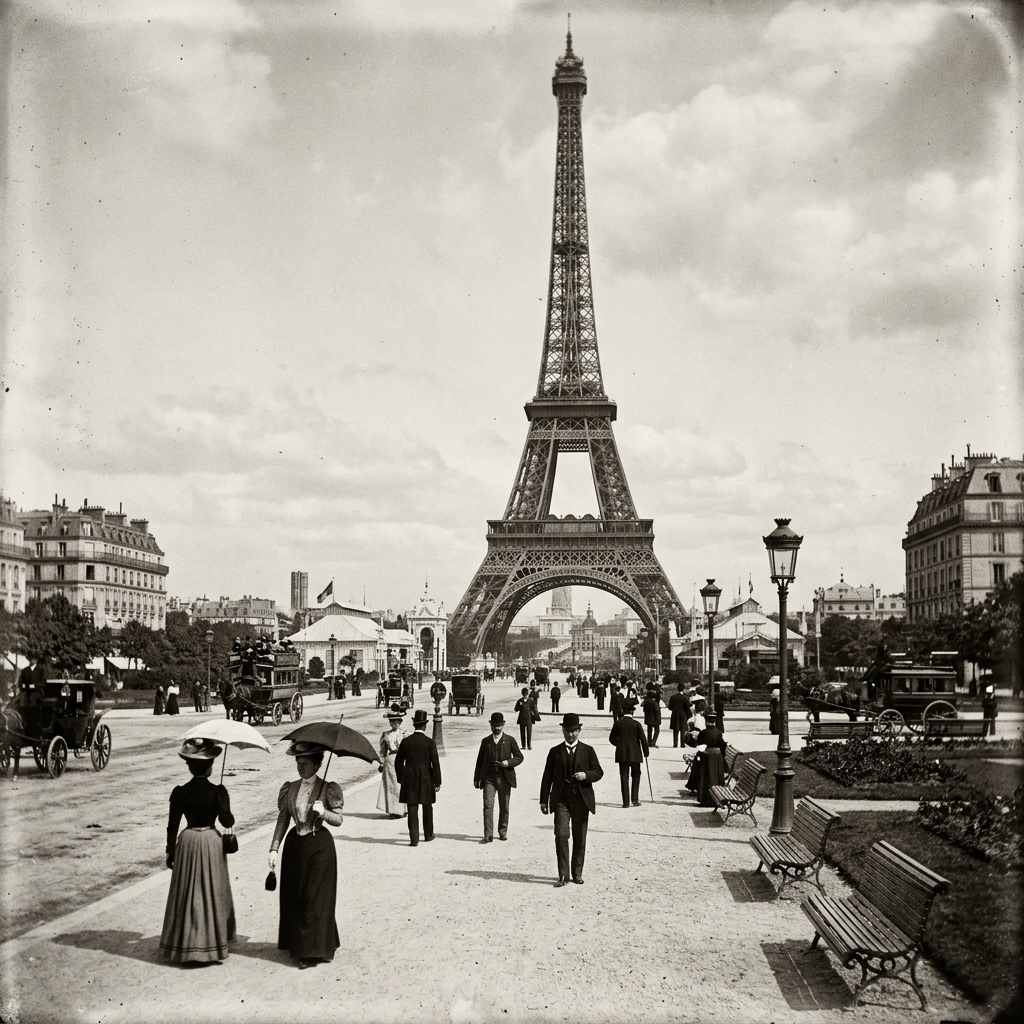
Paris at Its Peak: The Belle Époque
Pip: The Belle Époque ran from 1871 to 1914 — four decades that produced Impressionism, Art Nouveau, the Moulin Rouge, and Proust. The question worth asking is how one city, in one stretch of time, generated that much.
Mara: The post gives a pointed answer to that. It notes the name itself was coined only in retrospect: “the term emerged after the devastation of World War I — looking back through a lens of nostalgia and grief, Europeans remembered the pre-war decades as a lost paradise of optimism, elegance, and cultural brilliance.”
Pip: So the golden age only became golden once it was gone. The trauma of mechanized warfare is what made 1880s Paris look like paradise.
Mara: The post maps the era across visual art, literature, dance, and music — Monet and Toulouse-Lautrec in painting, Zola and Proust in fiction, La Goulue and Loïe Fuller on the cabaret stage. The pivot to the next segment is built right into that list: the music. Let’s follow Debussy, Fauré, and Ravel into the rooms where their careers were actually made.
The Salons That Built French Music
Pip: The Paris Conservatoire gets the credit; the drawing rooms did the work. The post on Fauré, Debussy, and Ravel argues that the aristocratic salon was the real engine of musical innovation in the Belle Époque.
Mara: It puts it directly: “the Parisian private salon served as the supreme laboratory for musical innovation, intellectual exchange, and artistic patronage — hosted by wealthy, cultured aristocrats like the Princesse de Polignac and Marguerite de Saint-Marceaux, these intimate gatherings bypassed the conservative strictures of the Paris Conservatoire.”
Pip: So the institution that was supposed to nurture new music was the obstacle, and the dinner parties were the workaround.
Mara: For all three composers, in different ways. Fauré moved through elite circles with ease and eventually became Conservatoire director. Debussy privately despised “salon music” as a category but relied on salon patronage to survive. Ravel’s salon supporters actually forced an administrative overhaul at the Conservatoire after he was denied the Prix de Rome. The salon wasn’t just a venue — it was leverage. And that tension between private support and public recognition carries directly into Cocteau’s world.
Cocteau, Death, and the Young Man’s Psyche
Pip: Jean Cocteau’s 1946 ballet gives you a young man, a cruel woman, a noose, and a rooftop exit. The post revisiting it argues the real subject isn’t the woman at all.
Mara: Cocteau’s own libretto lays out the premise plainly: “In a workshop, a young man alone is waiting. In comes the girl who was the cause of his distress. He rushes towards her, she pushes him away, he begs her, she insults him, scoffs at him and tells him to go hang himself. He hangs himself.”
Pip: Seventy-plus years old, and the story still reads as blaming the woman for the man’s death. The post is direct about that problem.
Mara: Very direct. It calls the libretto “a cheap shot designed to shock” and names the misogyny explicitly, tracing it to Cocteau’s own biography — his relationship with Princess Natalie Paley, his bitterness at her rejection, his phrase that women are “the killers of poets’ children.”
Pip: Which is doing a lot of psychological work dressed up as artistic provocation.
Mara: The post’s real move is to reframe the ballet entirely. The painting it describes — oil on canvas, covered in camouflage netting — repositions death not as the woman but as the young man’s own psyche. The netting is deliberate: it forces the viewer to look through discomfort rather than past it.
Pip: So the camouflage is the argument. You have to want to see what’s underneath.
Mara: And the post connects that to depression and suicide as subjects that need normalizing — “like cancer and other syndromes and lifestyle diseases.” The work doesn’t let the audience stay comfortable. The post also mentions two later paintings — a COVID-era self-portrait confronting a death skull, and pieces titled “La mort rappelle une vie passée” and “Eternal Sleep” — continuing that same reckoning with mortality across different contexts.
Pip: The Belle Époque gave us the beautiful era. Cocteau gave us the bill.
Mara: And the work of sitting with it honestly is still ongoing.
Pip: Paris, salons, a ballet about suicide — what connects them is the question of who gets to name an era and who absorbs the cost of it.
Mara: Next time, more from osoparavos.com — same questions, different rooms.
____________________________
Leave a Reply