Museums and galleries: From Physical Containment to Digital Immersion
The landscape of cultural preservation and artistic display is undergoing a fundamental transformation. For centuries, the institutional framework of the art world relied on physical containment: the “white cube” gallery and the monumental stone museum. These spaces preserved original physical artifacts while strictly controlling access through geographic, social, and financial barriers.
However, the rapid convergence of immersive projection technologies, spatial computing, artificial intelligence, and global digital infrastructure has catalyzed a profound shift toward digital art museums and galleries.
merxwire.com
Assessing the likelihood of a sustained, long-term upsurge in digital art institutions requires analyzing both legacy cultural flagships—such as the Musée du Louvre—and pure-play born-digital exhibition spaces. The evidence indicates that the rise of digital art venues is not a temporary trend driven by pandemic-era remote access, but a permanent structural realignment of the global cultural economy.
The Paradigm Shift: From Physical Containment to Digital Immersion
The modern museum historically functioned as a repository of tangible heritage, where the “aura” of the original object—to borrow Walter Benjamin’s seminal formulation—demanded physical proximity. Traditional art galleries operated under a model of scarcity, presenting singular physical objects to localized, physical audiences.
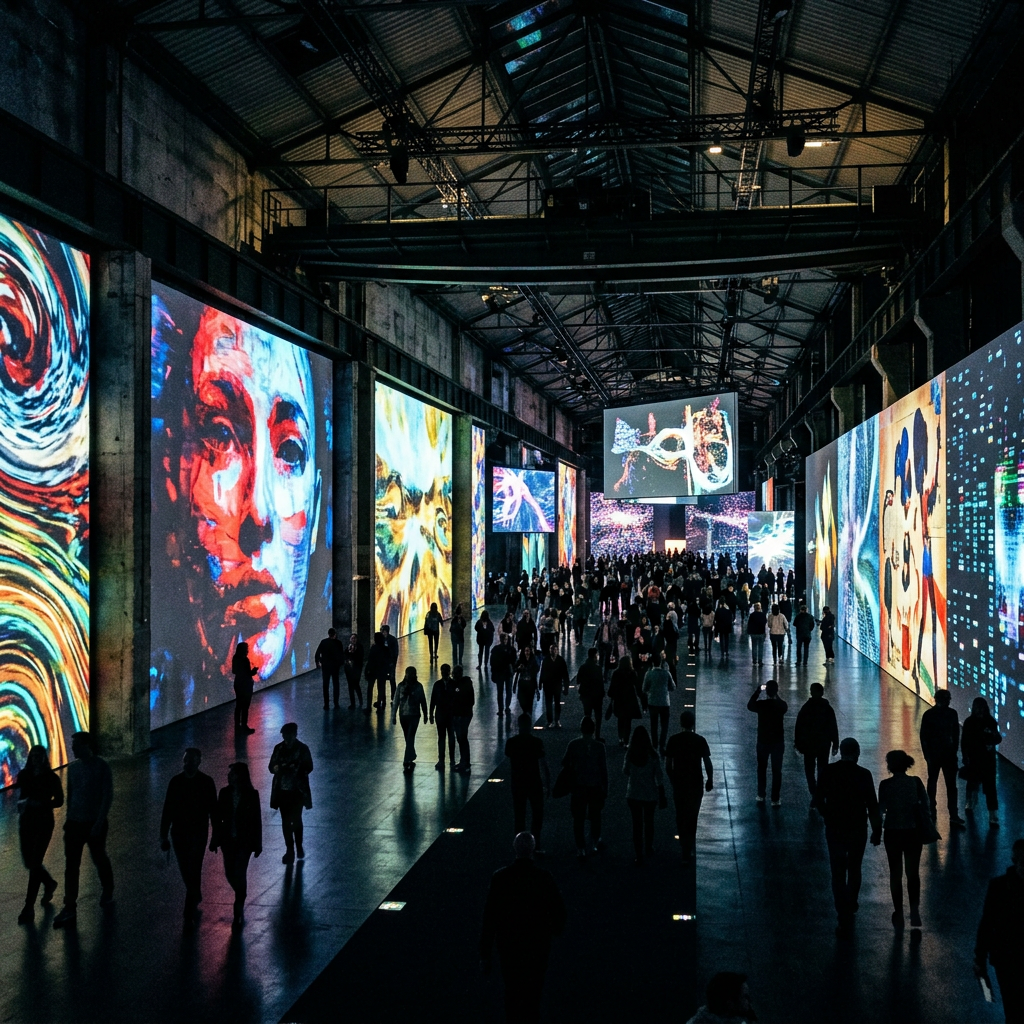
Digital art museums invert this logic by prioritizing accessibility, interactivity, and spatial transformation over physical scarcity. Rather than requiring visitors to observe framed objects passively from a respectful distance, digital exhibition spaces envelop the spectator within generative light, spatial audio, and responsive algorithms.
merxwire.com
This paradigm shift is propelled by two distinct operational models:
- Institutional Digitalization: Legacy institutions digitize physical collections, launch virtual reality (VR) environments, and integrate augmented reality (AR) inside physical galleries.
- Pure-Play Immersive Venues: Purpose-built commercial or non-profit spaces leverage projection mapping, light engines, and real-time graphics algorithms to present digital-first art.
Together, these models expand the definition of what a museum can be, moving from static conservation toward dynamic, distributed engagement.
┌─────────────────────────────────────────────────────────────────┐│ THE DUAL DIGITAL VECTOR │├───────────────────────────────┬─────────────────────────────────┤│ Legacy Modernization │ Pure-Play Digital Spaces ││ (e.g., Louvre, Met, V&A) │ (e.g., teamLab, Atelier) │├───────────────────────────────┼─────────────────────────────────┤│ • Collection Open Access │ • Projection Mapping & XR ││ • In-situ AR & VR Mediation │ • Generative & AI-Driven Art ││ • Global Web3/Virtual Archiving│ • High-Throughput Ticket Models│└───────────────────────────────┴─────────────────────────────────┘
Legacy Institutional Adaptation: The Louvre’s Digital Transformation
To evaluate the broader digital momentum, one must examine how the world’s most visited physical museum—the Musée du Louvre in Paris—has systematically incorporated digital platforms into its core mission. Far from resisting digital integration, the Louvre has actively deployed digital tools to address physical over-tourism, expand scholarly access, and engage younger global audiences.
The Louvre Museum Wonders Revealed – エキサイトブログ
                     ┌───────────────────────────┐
                     │ Louvre Digital Platform   │
                     └─────────────┬─────────────┘
                                   │
         ┌─────────────────────────┼─────────────────────────┐
         ▼                         ▼                         ▼
┌──────────────────┐      ┌──────────────────┐      ┌──────────────────┐
│ Global Online    │      │ Virtual Reality  │      │ Augmented Reality│
│ Open Database    │      │ Experiences      │      │ In-situ Mediation│
│ (480,000+ items) │      │ (e.g., Mona Lisa)│      │ (Snapchat Studio)│
└──────────────────┘      └──────────────────┘      └──────────────────┘
1. Global Open Access and Archival Digitalization
In 2021, the Louvre launched its integrated online collection database (collections.louvre.fr), publishing over 480,000 digitized artworks—representing almost the entirety of its physical holdings, including items in storage. Accompanied by the interactive Atlas database, this platform provides high-resolution imagery and curated scientific metadata across all eight museum departments. By making its collection open-access, the Louvre transitioned from a localized Parisian destination into an always-on, globally accessible digital museum.
EU Open Data Portal – European Union+ 2
2. Immersive Mediations: VR and Interactive Platforms
The Louvre’s adoption of virtual reality established a precedent for legacy institutions. Its landmark initiative, Mona Lisa: Beyond the Glass, created in partnership with HTC Vive Arts, utilized 3D infrared scanning and VR storytelling to transport remote and on-site users behind the protective glass. By revealing painted layers, wood panel conservation details, and historical context unobtainable during a standard gallery walkthrough, the Louvre demonstrated that digital platforms can enhance visual comprehension rather than detract from physical art.
3. In-Situ Augmented Reality Integration
Furthering its digital strategy, the Louvre partnered with Snap Inc.’s Paris AR Studio to launch The Incredible Unknowns of the Louvre. This initiative overlays interactive augmented reality onto classical antiquities and lesser-known masterpieces. By scanning QR codes adjacent to physical labels, visitors use smartphones to reveal original polychromy, missing structural elements, and procedural historical animations directly over the physical artifacts.
Finestre sull’Arte+ 1
This hybrid approach underscores how legacy institutions use digital layers to revitalize physical collections without altering the physical artifacts themselves.
The Rise of Pure-Play Immersive Digital Museums
While legacy museums integrate digital extensions, pure-play digital museums represent a distinct economic and artistic sector. Organizations such as teamLab (Japan), Culturespaces (operators of Atelier des Lumières in Paris and Hall des Lumières in New York), Superblue (Miami), and Frameless (London) have built scalable, highly profitable digital exhibition venues.
┌────────────────────────────────────────────────────────────────────────┐│ PURE-PLAY DIGITAL MUSEUM ARCHITECTURE │├───────────────────┬────────────────────────────────────────────────────┤│ Media Layer │ Ultra-high-definition 8K Projections, LED Arrays │├───────────────────┼────────────────────────────────────────────────────┤│ Interaction Layer │ LiDAR tracking, Optical Motion Sensors, Haptics │├───────────────────┼────────────────────────────────────────────────────┤│ Compute Layer │ Real-time Rendering Engines (Unreal / Unity / Touch)│├───────────────────┼────────────────────────────────────────────────────┤│ Sound Layer │ Multi-channel Spatial Audio Arrays │└───────────────────┴────────────────────────────────────────────────────┘
Economic and Operational Advantages
Unlike traditional museums—which face strict insurance demands, climate control limits, international loan logistics, and art transit risks—pure-play digital venues operate under an adaptable infrastructure model:
- Scalability and Content Mobility: Digital exhibitions consist of code, video assets, and 3D environment files that can be instantly deployed, updated, or toured across global venues simultaneously with near-zero shipping overhead.
- High Throughput and Ticket Monetization: By eliminating physical display cases and strict room-capacity choke points, digital venues manage high visitor density while maintaining immersive quality.
- Adaptable Spatial Layouts: A single projection-mapped hall can host an immersive impressionist retrospective in the morning, a contemporary algorithmic software exhibition in the afternoon, and a corporate live performance at night.
Technological Catalysts Driving the Upsurge
The surge in digital art spaces is backed by major technological advancements that lower deployment costs while increasing visual fidelity.
Market Intelo
                     ┌───────────────────────────┐
                     │ Technological Catalysts   │
                     └─────────────┬─────────────┘
                                   │
         ┌─────────────────────────┼─────────────────────────┐
         ▼                         ▼                         ▼
┌──────────────────┐      ┌──────────────────┐      ┌──────────────────┐
│ Spatial Compute  │      │ Display Systems  │      │ Generative AI &  │
│ Hardware         │      │ & Projections    │      │ Real-time Code   │
│ (XR, Headsets)   │      │ (8K Laser, LED)  │      │ (TouchDesigner)  │
└──────────────────┘      └──────────────────┘      └──────────────────┘
1. Advanced Display Technologies and Real-Time Rendering
High-lumens laser projection costs dropped significantly over the past decade, while 8K rendering engines (such as Unreal Engine 5, Unity, and TouchDesigner) allow artists to synthesize reactive graphics at high frame rates. This eliminates visible pixelation and latency, enabling large-scale visual environments that respond dynamically to human movement.
Dataintelo
2. Spatial Computing and Consumer XR Adoption
The release of consumer-grade spatial computing platforms—including Apple Vision Pro and Meta Quest series—has democratized 3D spatial curation. Virtual galleries in spatial computing environments allow curators to set lighting, scale, and spatial audio with precision, offering digital museum experiences directly to remote audiences.
3. Generative AI and Algorithmic Artworks
Generative artificial intelligence and neural networks have introduced new artistic mediums that thrive in digital-native environments. Artists such as Refik Anadol process millions of public museum records or ambient environmental datasets through machine learning models, producing dynamic visual installations. These data-driven artworks require high-performance digital displays rather than traditional physical framing.
Comparative Assessment: Legacy vs. Born-Digital Institutions
| Feature / Dimension | Legacy Institutions (e.g., The Louvre, Met) | Pure-Play Digital Museums (e.g., teamLab, Atelier) |
|---|---|---|
| Primary Value Proposition | Historical authenticity, provenance, physical aura | Multisensory immersion, interactive agency, shareability |
| Collection Logistics | High transport, climate, and insurance costs | Digital file distribution, cloud deployment |
| Audience Engagement | Observational, educational, research-oriented | Experiential, participatory, social |
| Monetization Structure | Admissions, public subsidies, endowments, retail | High-yield ticketing, corporate events, licensing |
| Space Utilization | Static galleries, strict preservation constraints | Modular, dynamic spaces reconfigurable via software |
Socio-Economic and Pedagogical Drivers
The expansion of digital art spaces is heavily reinforced by shifting demographic preferences and pedagogical needs.
The Experience Economy and Social Shareability
Millennial and Gen Z demographics increasingly prioritize experiential spending over physical asset ownership. Digital art venues deliver visually rich environments optimized for social media discovery. This user-generated promotion creates low-cost organic marketing loops, keeping digital venues visible to new audiences.
Democratization of Art Education
Traditional art galleries can feel intimidating to non-expert audiences due to formal layouts and complex wall labels. Digital art spaces break down these cultural barriers through intuitive, interactive storytelling.
By allowing visitors to touch projected elements, manipulate 3D scans, or walk inside a painting, digital platforms broaden educational engagement across age groups and cultural backgrounds.
┌─────────────────────────────────────────────────────────────────┐│ DEMOCRATIZATION & ACCESSIBILITY PIPELINE │├─────────────────────────────────────────────────────────────────┤│ [Static Artifact] ──► [3D Scan / High-Res Capture] ││ │ ││ ▼ ││ [Web/Mobile Database] ◄───┼───► [Spatial XR / VR Experience] ││ (Global Remote Access) │ (Remote Immersive Learning) ││ ▼ ││ [In-Situ AR Projection Mapping] ││ (Interactive Local Engagement) │└─────────────────────────────────────────────────────────────────┘
Critical Challenges and Counterpoints
Despite strong growth prospects, the digital art museum sector faces structural challenges that limit complete dominance over traditional spaces.
1. Technological Obsolescence and Capital Expenditure
Digital display hardware, sensing arrays, and projection bulbs deteriorate over time and require continuous software updates. Unlike oil paintings or stone sculptures—which can endure for centuries with standard climate controls—digital exhibition hardware demands regular hardware refreshes and ongoing technical support.
2. Satiation and “Digital Fatigue”
As screen time and digital consumption remain high across daily work and social life, audiences may experience screen fatigue. Some critics argue that projection-mapped art turns classical masterpieces into commercial spectacles, stripping away historical depth in favor of quick visual stimulation.
3. Intellectual Property and Licensing Complexity
Digitizing, projecting, or modifying classical artworks introduces intellectual property and copyright challenges. While public domain works like the Louvre’s Renaissance paintings can be freely adapted, licensing 20th-century and contemporary art for digital projection demands complex royalty negotiations.
Synthesis and Future Outlook
The evidence indicates a high likelihood of a sustained, long-term upsurge in digital art museums and galleries. Rather than replacing physical museums, digital platforms are forming a complementary, hybrid ecosystem.
                 FUTURE HYBRID CULTURAL ECOSYSTEM

       ┌─────────────────────────────────────────────────┐
       │             Phygital Exhibition Hub             │
       └────────────────────────┬────────────────────────┘
                                │
         ┌──────────────────────┴──────────────────────┐
         ▼                                             ▼
┌──────────────────────────────┐             ┌───────────────────┐
│ Legacy Physical Preservation │             │ Born-Digital      │
│  • Authentic Materiality     │  ◄───────►  │ Spatial Venues    │
│  • Provenance & Research     │  Networked  │  • XR / VR Layers │
│  • Conservation              │ Integration │  • Generative AI  │
└──────────────────────────────┘             └───────────────────┘
Legacy institutions like the Louvre demonstrate that traditional museums must adopt digital databases, AR mediation, and VR storytelling to remain globally accessible and pedagogically relevant. Concurrently, pure-play digital venues prove that software-driven, immersive spaces address a growing public desire for interactive cultural experiences.
As projection engineering, spatial computing hardware, and real-time generative software continue to advance and drop in cost, the boundary between physical gallery walls and digital environments will blur further. The future of the museum lies not in choosing between physical artifacts and digital displays, but in integrating both into a flexible, accessible, and globally connected cultural infrastructure.
Market Intelo+ 1
Leave a Reply