When the Age-Old Artform of Storytelling Discovers AI: Where AI Stories Are Today and Tomorrow
For tens of thousands of years, storytelling has been the definitive human enterprise. From charcoal paintings on cave walls and oral epics around open fires to printed novels, cinema, and interactive games, humanity’s fundamental impulse has remained constant: to make sense of existence by weaving narrative out of chaotic experience.
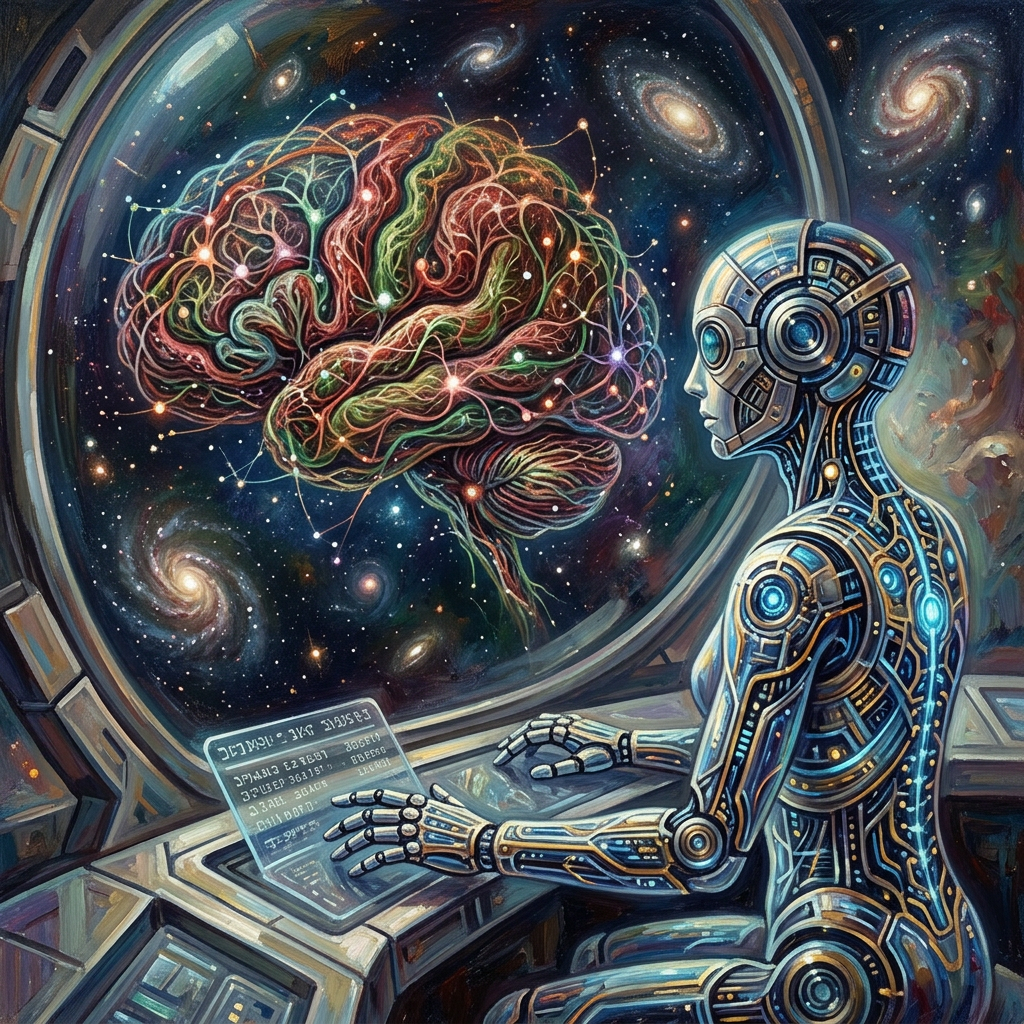
Yet, we are witnessing a epochal collision between this ancient artform and modern synthetic intelligence. As generative AI models learn to process, construct, and predict language, image, and sound, storytelling is encountering a medium that does not merely store or transmit stories, but actively generates them. To understand this paradigm shift, we must examine where AI story crafting stands today—its capabilities, limitations, and creative reality—and peer into tomorrow, where the nature of authorship and narrative consumption will undergo radical transformations.
Today: The Era of Co-Pilots, Multimodal Prototyping, and Bounded Creativity
At present, AI storytelling exists primarily in a state of high-powered co-creation. Large Language Models (LLMs) and diffusion tools serve as tireless writing partners, dynamic brainstorming engines, and rapid asset generators. Rather than replacing human authors, current AI tools operate as interactive mirrors that reflect and extrapolate human intent.
1. The Co-Writer and World-Building Assistant
Contemporary authors, screenwriters, and game developers use generative models to overcome writer’s block, brainstorm world-building details, generate alternative dialog lines, or draft scene backgrounds. AI excels at structural execution—analyzing tropes, suggesting plot twists, generating character names, and drafting prose based on detailed prompts. In video games and interactive media, generative AI aids in writing non-player character (NPC) dialogue trees and lore entries at scales previously impossible for small design teams.
Larry Collett
2. Rapid Multimodal Storyboarding
Beyond pure text, storytelling is fundamentally multimodal. Today’s storytellers leverage visual models, voice synthesizers, and music engines to instantly prototype concepts. An author drafting a fantasy novel can generate concept art for a landscape, sample an AI-generated orchestral score for a scene, and hear an AI voice act a character’s monologue.This rapid prototyping democratizes production, allowing solo creators to pitch or visualize concepts with the richness of a major studio.
Infosys BPM
3. Current Limitations: Hallucination and Missing Soul
Despite these leaps, today’s AI storytellers remain bounded by inherent limitations:
- Structural Amnesia: Long-form coherence remains a challenge. Models can generate compelling scenes, but maintaining intricate, overarching character arcs and thematic resonance over a 300-page novel or a multi-season script often requires heavy human editing and structural guidance.
- The “Derivative Average”: Because LLMs operate on statistical probabilities drawn from existing human literature, unprompted AI prose often defaults to clichés, formulaic tropes, and predictable rhythms.Larry Collett
- Lack of Lived Experience: A machine can analyze thousands of stories about grief, love, or existential dread, but it does not feel them. Authentic human storytelling thrives on subtext, subtle irony, and emotional vulnerabilities born of lived physical and emotional reality—elements that current AI can imitate, but cannot genuinely originate.Infosys BPM
Tomorrow: Hyper-Personalized Narratives, Living Worlds, and Autonomous Creators
As AI models evolve toward greater agentic autonomy, multi-hour context windows, and real-time multimodal generation, the landscape of storytelling will shift from fixed, static media to fluid, dynamic experiences.
                  EVOLUTION OF AI STORYTELLING

   TODAY: Assisted Creation       TOMORROW: Dynamic Experiences
  ┌──────────────────────────┐   ┌──────────────────────────┐
  │ • Human-in-the-Loop      │   │ • Real-time Personalization│
  │ • Multimodal Prototyping │ ─►│ • Autonomous NPC Agents  │
  │ • Static Novel/Script    │   │ • Living, Infinite Media │
  │   Enhancements           │   │ • Collaborative Auteur   │
  └──────────────────────────┘   └──────────────────────────┘
1. The Infinite, Adaptive Story
Tomorrow’s narratives will no longer be locked into linear formats. Books, games, and cinematic media will adapt in real time to the reader or player. Imagine reading a mystery novel where the plot subtly shifts based on your emotional engagement, or watching a film where dialogue, pacing, and visual style adjust dynamically to your personal preferences and viewing history. “Choose Your Own Adventure” will evolve into fully fluid, infinite narratives where audiences converse naturally with characters, fundamentally altering the trajectory of the plot.
2. Autonomous Virtual Entities and Living Worlds
In tomorrow’s interactive storytelling, NPCs in games and virtual worlds will possess persistent long-term memories,distinct psychological profiles, and personal motivations. Instead of following scripted dialogue trees, these autonomous synthetic agents will react organically to player choices, building living fictional societies capable of producing emergent,unscripted drama.
3. The Shift from Writer to Narrative Architect
As AI handles the heavy lifting of real-time rendering, prose generation, and cinematic synthesis, the role of the human storyteller will elevate. The author of tomorrow will act as a Narrative Architect or Creative Director—setting thematic boundaries, establishing core character motives, crafting the central philosophical conflict, and curating the model’s outputs rather than writing every word or directing every frame.
eesel AI
The Core Question: The Soul of the Story
As we move toward a future filled with synthetic narratives, storytelling faces a profound existential question: What makes a story meaningful?
If an AI generates a deeply moving story in seconds, it proves that narrative form can be algorithmically mastered.However, human beings read, watch, and listen to stories not merely for entertainment, but for connection. We seek to understand what it means to be human through the lens of another human mind. A story written by a person carries an implicit contract: someone survived or imagined this, felt this, and encoded their humanity into these words for me to decipher.
Larry Collett+ 1
Rather than rendering human authors obsolete, the rise of AI stories will likely split narrative art into two distinct,valuable streams:
- Hyper-personalized, infinitely scalable synthetic entertainment designed for immersive play, customized learning, and tailored escapism.Infosys BPM
- Authentic human-driven storytelling, prized precisely because of its human origin, lived vulnerability, and unique perspective.
Conclusion
The intersection of storytelling and artificial intelligence marks not the end of narrative art, but its newest renaissance.Today, AI serves as a powerful mirror and catalyst, aiding creators in visualizing and structuring their vision. Tomorrow, it will unlock entirely new art forms—boundless, personalized, and interactive—that were previously unimaginable.
eesel AI+ 1
Yet, no matter how advanced the algorithms become, the heart of storytelling will remain anchored in the human experience. AI can provide the canvas, the brush, and even suggest the strokes, but the underlying spark—the desire to communicate emotional truth across the void—will always belong to us.
Leave a Reply