THE MIND IN THE FACE OF THE IMPOSSIBLE
Neurological Transformations, Unexpected Talents, Altered States of Consciousness, and the Search for Figures of Survival, Renewal, and Hope
Introduction: When the Mind Returns Changed
There are moments when life seems to divide into two parts: what we were before an illness, an accident, an experience close to death, or an unexpected awakening; and what we become afterward. For some people, this division is accompanied by profound changes in perception, memory, personality, emotional sensitivity, or their understanding of the world. In rarer circumstances, artistic, musical, or mathematical abilities emerge that previously showed little or no significant expression. Other people report extraordinarily vivid dreams, inner voices, experiences of presence, impressions of communication with spiritual entities, or a feeling that they have received a mission or guidance that transforms their lives.
There are also accounts of individuals who, after a brain injury, a period of unconsciousness, or an extreme medical experience, claim to understand or speak a language they believe they never learned. Some of these stories are presented as cases of xenoglossy, a term used to describe the alleged manifestation of linguistic knowledge without any known prior learning. However, it is essential to distinguish personal accounts from phenomena demonstrated through independent testing. To date, there is no robust scientific evidence that anyone has acquired a demonstrable command of a foreign language through a coma or brain injury without identifiable prior exposure or learning.
This distinction does not diminish the importance of the human phenomenon underlying these narratives. Perhaps the most interesting question is not simply whether an extraordinary ability has emerged inexplicably, but how the brain can reorganize its capacities, how consciousness can assume unexpected forms, and why certain experiences are interpreted as encounters with celestial figures, historical characters, gods, saints, or presences endowed with superior wisdom.
These questions occupy a frontier between neurology, neuropsychology, psychiatry, anthropology, philosophy of mind, and the study of religion. These are different disciplines, but they can contribute to a common investigation: how does a human being reconstruct their identity when experience exceeds the limits of what they believed possible?
The central hypothesis of this essay is that some of these transformations can be understood as manifestations of brain plasticity, changes in the functioning of neural networks, alterations in perception and memory, and new ways of assigning meaning. The resulting experience may be profoundly real to the person who undergoes it, even when its supernatural interpretation cannot be scientifically confirmed.
1. The Brain Is Not a Static Machine
For a long time, intellectual and artistic capacities were imagined as relatively fixed features of an individual. According to this view, a person was born with a certain potential, developed their abilities throughout childhood and youth, and then essentially retained those same capacities, subject only to aging or deterioration.
Contemporary neuroscience presents a much more dynamic picture.
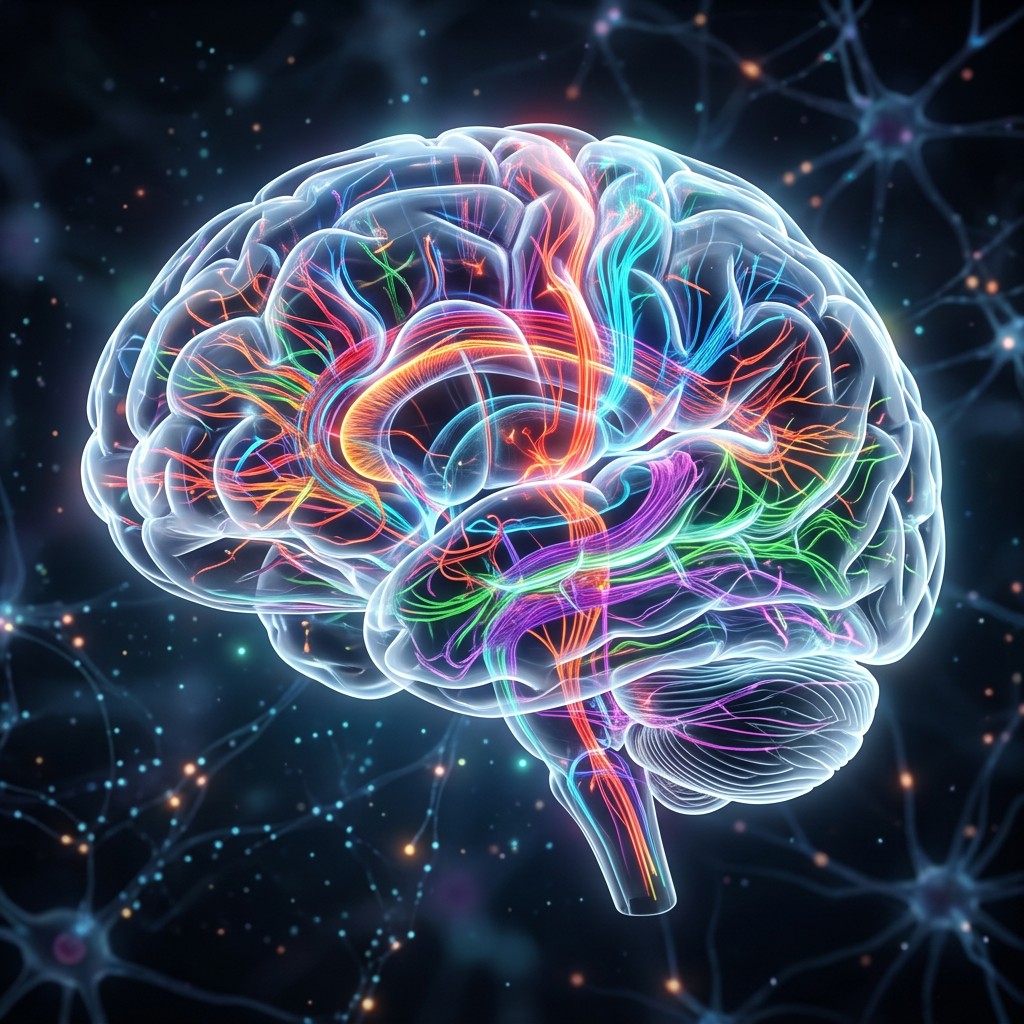
The brain is a biological system capable of modifying its connections, reorganizing circuits, adapting strategies, and redistributing certain functions in response to experience, learning, injury, and recovery. This property is known as neuroplasticity.
Plasticity does not mean that every ability can emerge spontaneously or that anyone can acquire any skill. It means that the nervous system possesses a considerable capacity for adaptation, the extent of which depends on anatomy, physiology, learning history, age, environment, and the nature of the alteration involved.
When someone experiences a stroke, traumatic brain injury, neurological infection, or another condition affecting the brain, different processes may occur. Some functions are impaired; others may be partially recovered; and, under certain circumstances, alternative strategies may be recruited to perform tasks that previously depended on different circuits.
Recovery may involve the reorganization of existing connections, the recruitment of additional brain regions, the learning of new procedures, and behavioral adaptation. In some cases, neurological changes may also produce unexpected shifts in attention, perception, behavior, or artistic expression.
It is within this territory that we encounter one of the mind’s most intriguing characteristics: a disruption may produce losses, but it may also reveal capacities that were not previously evident.
This does not mean that an injury necessarily creates an entirely new ability. Sometimes it changes the balance between brain systems, reducing certain forms of control and allowing other tendencies to become more prominent. On other occasions, the apparent novelty results from recovery, a change in motivation, intensive practice, or a transformation in how the person perceives and organizes experience.
The brain, therefore, should not be understood as a reservoir of hidden talents waiting for a catastrophe to release them. It is more accurately understood as a complex system in which capacities, limitations, control mechanisms, and opportunities for learning interact continuously.
Illness is not, in itself, a source of enlightenment. Nevertheless, changes produced by illness may occasionally alter the way a person uses their abilities and understands their own existence.
2. Acquired Savant Syndrome: When Neurological Transformation Accompanies Extraordinary Talent
One of the most relevant phenomena in this discussion is known as acquired savant syndrome.
Savant syndrome is characterized by exceptional abilities in one or more specific areas, often in contrast with significant limitations in other domains of cognitive functioning. These abilities may involve music, drawing, calculation, memory, calendars, or other highly specialized activities.
In the acquired form, the abilities are perceived as having emerged or become extraordinarily apparent after a neurological alteration or another significant event.
The phenomenon is rare and remains poorly understood. Scientific literature includes reports of individuals who began drawing with remarkable intensity, developed unusual attention to visual patterns, or displayed new artistic inclinations after traumatic injuries or other neurological changes.
One frequently discussed case is that of Jason Padgett, an American who reported developing an extraordinarily geometric way of perceiving the world after sustaining a head injury during an assault in 2002. Padgett began representing geometric patterns and mathematical structures visually, describing a marked transformation in his perception.
His story attracted attention through interviews, news reports, and the autobiographical book Struck by Genius, coauthored with Maureen Seaberg.
The case is interesting because it illustrates the possibility of profound subjective and behavioral change following traumatic injury. Padgett began interpreting shapes, movements, and everyday phenomena through geometric patterns, expressing this perception through his drawings.
It is important, however, to establish the limits of the interpretation. An autobiographical account, even when accompanied by clinical assessments, does not by itself demonstrate that a brain injury produced an entirely new mathematical capacity, nor that the individual acquired advanced mathematical knowledge comparable to that of a specialist. The most cautious conclusion is that the case describes a striking transformation in perception, interest, and visual expression following an injury.
Another frequently cited example is Derek Amato, who reported developing an intense capacity for musical improvisation after striking his head while diving into a swimming pool in 2006. According to his account, he subsequently began experiencing mental representations of musical patterns and producing music on the piano, despite lacking musical training equivalent to the ability he believed he had acquired.
His story has also been featured in reports and documentaries about acquired talent.
As with Padgett’s case, it is necessary to distinguish the reported experience from what has been established through systematic scientific investigation. We should not assume, based solely on testimonials or public performances, that every characteristic attributed to the phenomenon has been verified through independent neuropsychological assessments.
Nevertheless, both accounts help us formulate a legitimate question: how can a change in brain functioning radically transform perception, motivation, and the expression of particular abilities?
One hypothesis is that changes in systems responsible for control, information selection, and perceptual processing may alter the way an individual detects patterns and engages with certain activities. Another possibility is that a dramatic behavioral change leads to much more frequent practice, which subsequently develops genuine skills over time.
These explanations are not necessarily mutually exclusive.
Extraordinary talent may emerge from an interaction among prior predisposition, neurological alteration, a new form of attention, unusual motivation, and persistent practice. Determining the contribution of each component requires individual investigation rather than a universal explanation.
The significance of these cases lies precisely in what they reveal about the complexity of the brain: not all cognitive transformations can be reduced to a simple distinction between a capacity being present or absent.
3. The Case of Tommy McHugh: Creativity, Behavior, and Brain Reorganization
Another widely publicized case is that of Tommy McHugh, a British man who began devoting himself intensely to art and poetry after suffering a brain hemorrhage in the late 1990s.
McHugh reported a profound change in his behavior, interests, and need to draw and write. His artistic production became central to his life, and he began creating drawings and paintings persistently.
His story has been explored in documentaries and reports about changes in personality and creativity following brain injuries.
The case is particularly relevant because it helps distinguish two things that are often confused: the acquisition of a technical skill and a transformation in a person’s relationship with a particular activity.
Someone may learn to draw by developing visual and motor skills. Another person may draw because they develop an intense need to represent everything they see, think, or imagine. A third may experience both changes.
In McHugh’s case, the interest lies not only in the quantity of work he produced but also in the transformation that artistic activity represented in his identity.
This kind of change raises important questions about the brain systems involved in motivation, behavioral control, emotional regulation, and the assignment of significance to experience.
The frontal regions of the brain contribute to executive functions, planning, impulse control, and behavioral organization. Temporal and parietal systems contribute to different aspects of memory, perception, and information integration. Distributed networks, in turn, support processes involving imagination, self-referential thought, emotional evaluation, and creativity.
An injury may affect different components of this system and alter how a person selects stimuli, regulates impulses, or engages in an activity.
This does not justify the conclusion that there is a single brain center for creativity, much less that reducing one brain function automatically increases another. Creativity depends on interactions among multiple systems and may take different forms depending on the individual and the circumstances.
McHugh’s case is therefore more useful as an illustration of behavioral and artistic transformation following neurological alteration than as proof of a definitive theory about the origin of talent.
It also reminds us that an ability can acquire profound existential meaning. The person does not merely begin producing something; they begin organizing their life around an activity that previously occupied a different place in their world.
4. The Brain and the Production of Meaning: Why Do Some Experiences Seem to Come from Another Intelligence?
Among the most intriguing reports associated with extreme neurological states are experiences of presence, inner voices, visions, and the impression of receiving messages from a source independent of one’s own consciousness.
A person may feel that someone is standing nearby when nobody is present. They may hear a voice that seems to possess its own identity. They may experience a sentence as something received rather than formulated. They may feel that a greater intelligence is guiding their thoughts.
These experiences are not all the same, and they should not automatically be classified as manifestations of mental illness. Experiences of presence can occur during bereavement, sleep deprivation, transitions between sleep and wakefulness, periods of intense stress, and specific neurological states. Some people also describe profound spiritual experiences without functional impairment or other signs of illness.
Neurology offers hypotheses that may help explain some of these phenomena.
The brain does not merely receive sensory information: it also constructs models of the world, predicts events, interprets ambiguous signals, and distinguishes—normally with considerable effectiveness—between one’s own thoughts and information originating in the environment.
This distinction depends on complex processes. These include sensory integration, memory, action monitoring, the perception of agency, and the evaluation of where thoughts originate.
When these processes are altered, a mental experience may be interpreted differently from the usual way. A thought may seem involuntary. A mental image may acquire an almost perceptual intensity. An inner voice may be experienced as though it were produced by someone else.
Research on auditory hallucinations, for example, investigates how alterations in the processing of inner speech, thought monitoring, and source attribution may contribute to the experience of hearing voices. No single model explains every case, and the presence of a voice does not, by itself, establish a specific cause.
Experiences of presence have also been studied in connection with changes in the integration of bodily and spatial information. Research involving the temporoparietal junction and other brain networks suggests that the way the brain represents the body, spatial perspective, and agency may contribute to some of these sensations.
In certain contexts, activity in temporal regions and networks associated with memory and emotion has also been investigated in experiences of intense religious or spiritual significance.
It is essential, however, not to turn these associations into simplistic explanations. There is no single brain region responsible for God, spirituality, or every experience of presence. Nor does an alteration observed in a particular region demonstrate that all spiritual experiences are hallucinations.
Neuroscience can investigate how an experience becomes possible, how it is perceived, which brain processes accompany it, and how the individual interprets it.
The metaphysical question—whether an external entity corresponding to the experience actually exists—cannot be resolved simply by identifying a neural correlation.
An experience may be neurologically mediated without that fact, by itself, determining its ultimate philosophical meaning. All known human experiences, including those considered ordinary, depend on the functioning of the nervous system. This does not automatically make the things we perceive, feel, or value false.
The challenge is to distinguish explanations of the mechanisms underlying an experience from interpretations concerning its ultimate nature.
5. Awakening from a Coma and the Reconstruction of Identity
Coma occupies a particularly powerful place in the collective imagination because it represents a radical interruption in conscious communication with the world.
To family members and observers, the person appears absent, inaccessible, or suspended between life and death. The return of consciousness can be experienced as a kind of rebirth, especially when it follows a prolonged period of serious illness.
From a medical perspective, however, it is important to distinguish coma, the vegetative state—also called unresponsive wakefulness syndrome—minimally conscious state, and other conditions involving altered consciousness. These are different conditions, with distinct clinical characteristics and prognoses.
Recovery may occur gradually and unevenly. Some people regain the ability to communicate and recognize their surroundings; others continue to experience significant cognitive, motor, or behavioral impairments. The trajectory depends on the cause, the extent of the injury, medical complications, and many other factors.
A person who awakens may experience changes in memory, attention, language, sleep, personality, and emotional regulation. They may struggle to reconstruct the period of illness or understand their own condition. In other cases, fragmented recollections, vivid dreams, or images produced during altered states of consciousness may become incorporated into the narrative of recovery.
It is understandable that an experience of this magnitude can transform personal identity. Surviving a potentially fatal condition may change priorities, relationships, values, and one’s perception of time. A person may become more interested in art, religion, philosophy, or activities that previously seemed secondary.
Nevertheless, we should not assume that a coma itself releases hidden knowledge or produces extraordinary talents. The recovery of consciousness does not imply the acquisition of new abilities, and the presence of vivid memories does not necessarily demonstrate that the events remembered occurred exactly as they are perceived.
During recovery, factors such as medication, sleep disturbances, delirium, brain injuries, anxiety, and other clinical conditions may influence perception and memory. Medical evaluation is essential when significant changes occur.
The image of rebirth remains meaningful, but it should be understood on two levels.
At the biological level, there is a variable recovery of brain and bodily functions. At the existential level, the individual and their family attempt to integrate an experience that has profoundly disrupted the continuity of life.
These two levels can coexist without our needing to confuse them.
6. The Alleged Spontaneous Acquisition of Languages: The Enigma of Xenoglossy
Among the most extraordinary narratives are those in which a person, after an illness, a state of unconsciousness, or a spiritual experience, claims to speak a foreign language they have never studied.
These accounts are frequently called xenoglossy. The term is commonly used to describe the alleged manifestation of linguistic knowledge that cannot be explained by any known prior learning.
The term requires caution because the stories grouped under this label may involve quite different phenomena.
A person may remember words or expressions heard in childhood without consciously remembering the exposure. They may have encountered songs, films, conversations, prayers, or other linguistic material that was subsequently forgotten. They may also reproduce memorized phrases without possessing productive command of the language.
There are also situations in which someone recognizes linguistic sounds or patterns more accurately than they can explain, but this familiarity does not necessarily amount to speaking the language.
To demonstrate genuine linguistic competence, it would be necessary to assess such aspects as grammar, vocabulary, spontaneous comprehension, the ability to maintain conversations, the construction of new sentences, pronunciation, and contextual appropriateness. Ideally, the assessments would be conducted by independent specialists who were not already familiar with the story of the case.
It is equally important to rule out prior learning, incidental exposure, memorization, cues provided by the interviewer, and other ordinary explanations.
Neuroscience recognizes related but distinct phenomena that help us understand why language may seem unexpected after neurological alteration.
Aphasia, for example, can impair language production or comprehension. In some cases, certain linguistic abilities are relatively preserved while others are disrupted. Changes in fluency, word retrieval, and speech organization may also occur.
Some individuals develop changes in pronunciation or speech rhythm that listeners perceive as resembling a foreign accent. This phenomenon is known as foreign accent syndrome. It does not mean that the person has acquired a new language; rather, it involves changes in speech production that may alter phonetic and prosodic characteristics.
These conditions demonstrate that language depends on complex mechanisms and that brain changes can profoundly alter its expression.
They do not, however, demonstrate the spontaneous acquisition of a complete language without prior exposure.
To date, xenoglossy lacks robust scientific evidence confirming the acquisition of linguistic competence without identifiable learning or exposure. This does not mean that every account is deliberately false. A person may honestly report an extraordinary experience and still be mistaken about the origin of their abilities.
The scientifically responsible position is to remain open to investigating individual cases, require verifiable documentation, and avoid presenting as established fact what has not yet been demonstrated.
7. Automatic Writing, Inner Voices, and the Feeling of Receiving a Message
Automatic writing is a phenomenon in which a person writes words or sentences that they experience as emerging without full conscious deliberation. In some spiritual traditions, it is interpreted as a form of communication with spirits, guides, angels, deities, or other intelligences.
The phenomenon can also be studied through the psychology of action, attention, imagination, and the experience of agency.
The production of thoughts and movements does not require every stage to be consciously planned. In everyday writing, for example, many movements are performed with little deliberate attention. A sentence may begin to emerge before the writer can consciously explain why particular words were chosen.
Creative writing offers familiar examples of this process. Authors report that characters seem to acquire voices of their own, that certain sentences arise unexpectedly, or that a narrative takes directions that were not consciously planned.
This does not imply that the characters or messages possess an independent existence. It shows that human consciousness does not always transparently monitor every process involved in mental production.
In spiritual contexts, the same kind of experience may receive a different interpretation. The person may understand the spontaneity of the writing as evidence of external communication.
It is necessary to distinguish the description of the experience from the explanation of its origin. A person may genuinely feel that they do not fully control what they write; that feeling, by itself, does not establish the presence of an external entity.
Experiences of inner voices also vary considerably. Some resemble ordinary internal dialogue. Others are perceived as distinct voices with their own personalities, intentions, or authority. They may be comforting, neutral, disturbing, or threatening.
In clinical contexts, evaluation depends on many factors: frequency, intensity, distress, impact on everyday life, cultural context, sleep quality, medical history, substance use, and the presence of other symptoms.
A voice perceived as spiritual should not automatically be treated as a sign of illness. At the same time, an experience that causes intense fear, disrupts daily functioning, or commands dangerous actions warrants professional evaluation, regardless of the religious interpretation assigned to it.
The essential point is that the brain can produce experiences whose content appears to come from an independent source. The way such an experience is interpreted depends partly on personal history, beliefs, culture, and the circumstances in which it occurs.
It is at this intersection between mental activity and cultural interpretation that figures such as angels, saints, ancestors, sages, gods, and historical personalities emerge.
8. Why Does the Mind Choose Particular Figures? Archetypes, Cultural Memory, and Survival
An intense experience rarely remains merely a collection of disconnected sensations. Human beings seek to interpret it, relate it to their own history, and incorporate it into a narrative that explains why it happened and what it means.
When someone experiences a serious illness, a near-death experience, or a profound psychological transformation, they may feel a need to understand the event through images and characters capable of representing what they have undergone.
For someone raised in a Christian tradition, the image of Jesus may represent suffering, sacrifice, resurrection, forgiveness, and victory over death. For another person, an angel may symbolize protection and guidance. Someone familiar with Buddhist traditions may interpret the experience through images of enlightenment, compassion, and liberation from suffering.
Other people may turn to ancestors, mythological figures, literary heroes, historical personalities, or symbols that do not belong to any organized religion.
Carl Gustav Jung developed an influential theory of archetypes and the collective unconscious. In his view, certain images and symbolic structures recur across different cultures and human narratives, providing ways to represent conflict, transformation, and possibilities for psychological development.
Jungian theory remains influential in fields such as analytical psychology, literature, and cultural studies, but it should not be confused with an established conclusion of contemporary neuroscience. The existence of universal symbolic structures in a strong sense, independent of cultural learning, remains debated.
Nevertheless, the concept of archetypes offers a useful interpretive tool for understanding why certain images become especially powerful during moments of crisis.
A character who passes through death and returns may symbolize the hope that identity can survive destruction. A healing figure may represent the possibility of restoring the integrity of the body and life. A hero who defeats an apparently invincible force may represent an individual’s struggle against an illness that threatens their existence.
These symbols need not be understood as proof of supernatural reality to possess psychological value.
Human memory is reconstructed through personal experiences, cultural information, expectations, and later interpretations. When someone undergoes an extreme event, they may draw upon the images that best correspond to the emotions and problems they must confront.
This process may occur consciously or without explicit deliberation.
A person may interpret a presence as an angel because the image of an angel represents protection. Another may feel that they have received a message from an ancestor because that figure symbolizes family continuity and wisdom. A third may imagine that a historical figure is conveying courage because they associate that personality with resistance in the face of adversity.
The choice of figure may depend on cultural familiarity, autobiographical memory, emotional needs, and the specific content of the experience.
This does not mean the person is deliberately inventing the experience. The interpretation may emerge spontaneously and be experienced with profound conviction.
Nor does it mean that all experiences have an exclusively psychological explanation. It simply means that there are known mechanisms through which the brain attributes identity, intention, and meaning to ambiguous or extraordinary events.
The chosen figure often functions as a bridge between an experience that is difficult to understand and a narrative capable of making it emotionally bearable.
9. Jesus, Lazarus, and the Image of Victory Over Death
Within Christianity, few images represent the hope of renewal as powerfully as the resurrection of Jesus.
The Christian narrative of crucifixion and resurrection associates suffering, loss, apparent defeat, and renewal. Death, which ordinarily seems to establish a definitive boundary, is reinterpreted as part of a story whose outcome transcends that boundary.
From a psychological and cultural perspective, this narrative offers a powerful structure for interpreting experiences of survival.
A person who regains consciousness after a serious illness may understand their recovery as a second chance at life. Someone who survives a devastating diagnosis may feel that they have passed through a form of symbolic death and been reborn into a different existence.
The association with Jesus is not merely an abstract comparison. For Christians, it is embedded in a concrete religious tradition with specific theological meanings. For those who do not share that faith, the image may function as a metaphor for resistance, renewal, and transformation.
It is important to respect this distinction. The theological interpretation of an experience is not identical to the neurological explanation of its mechanisms.
The story of Lazarus, recounted in the Gospel of John, also offers an important image. Jesus calls Lazarus out of the tomb, and the narrative presents the episode as a sign of life in the face of death.
Within the Christian imagination, Lazarus became a figure associated with the return of life and hope in the face of what appears irreversible.
The symbolic power of this story makes it understandable that some people draw upon it when interpreting experiences of extreme recovery.
However, it would be inappropriate to conclude that a person awakening from a coma has experienced a resurrection in the medical or theological sense. Coma is a neurological condition, and recovery depends on biological processes that must be assessed individually.
The analogy is symbolic: a medical experience may be lived as a radical rupture with one’s previous life, and the narrative of resurrection provides a cultural language for expressing this transformation.
Hope emerges, in this context, from the possibility that the story need not end at the moment when everything seemed lost.
10. The Phoenix, Osiris, and Gods Who Pass Through Destruction
Christianity is not the only tradition that offers images of death and renewal.
The phoenix, a mythical bird associated with destruction by fire and rebirth, has become a widely recognized symbol of regeneration. Its power derives from the idea that the end of one form of existence may be followed by the emergence of another.
The image is particularly appropriate for representing profound personal transformations. Someone may feel that their previous identity was destroyed by an illness, trauma, or crisis and that they subsequently had to construct a new way of living.
The phoenix offers a metaphor for this process, but it should not be confused with a biological explanation of recovery. The symbol describes a human experience of transformation; it does not explain the mechanism of a brain injury or medical recovery.
In Egyptian mythology, Osiris occupies a central place in narratives of death, restoration, and renewal. His story, associated with the actions of Isis and the continuity of life, was interpreted in different religious and funerary contexts in ancient Egypt.
Osiris became associated with kingship, the world of the dead, and the possibility of continuity after death. His presence in Egyptian culture reveals how societies developed religious images to address mortality and the hope of permanence.
For a contemporary person undergoing a radical transformation, these narratives may offer analogies for the reconstruction of identity.
A previous life may seem fragmented. The body may no longer respond as it once did. Family relationships may change. The person may have to relearn everyday activities and reconstruct their understanding of themselves.
The idea of restoration then becomes a way of organizing experience.
Other traditions present figures and narratives associated with renewal, compassion, protection, or liberation from suffering. Their differences should not be erased in the name of a supposed universal religion. Each tradition has its own history, texts, practices, and conceptions of existence.
Nevertheless, a common human question remains: how can we find meaning when the continuity of life is interrupted by events beyond our control?
Narratives of rebirth offer symbolic answers to this question.
11. Chiron, Asclepius, and the Transformation of Suffering into Healing
In Greek mythology, Asclepius is associated with medicine and healing. His cult developed around sanctuaries where the sick sought treatment and, in certain contexts, participated in dream-incubation practices and religious rituals.
The story of Asclepius shows that long before modern medicine, healing was understood through a combination of observation, therapeutic practices, ritual, and spiritual interpretation.
Today, medicine relies on scientific methods that allow treatments to be evaluated, physiological mechanisms to be identified, and risks and benefits to be estimated. This transformation does not eliminate the emotional and cultural dimensions of illness, but it establishes specific criteria for determining whether an intervention is effective and safe.
Chiron, the centaur known for his wisdom and his role as a teacher and healer, offers another significant image. In different versions of the mythology, his own incurable wound is linked to his relationship with suffering and healing.
The figure of Chiron has become a metaphor for someone who develops sensitivity to the pain of others because they have faced difficulties of their own.
This image may help us understand a phenomenon observed in many recovery stories: some people become devoted to caring for others after surviving an illness or traumatic event.
They may become patient advocates, volunteers, artists, healthcare professionals, or participants in support groups. Suffering does not necessarily produce compassion or wisdom, but under certain circumstances it can become a motivation to help other people.
We should not romanticize illness or suggest that suffering is necessary for moral development. Many people endure trauma without extracting a positive narrative from it, and this is not a failure.
The more balanced lesson is that a painful experience may acquire new meanings over time. A person does not need to regard illness as a gift in order to build a valuable life afterward.
12. Prometheus, Heracles, and the Struggle Against the Impossible
Among mythological figures associated with resistance, Prometheus occupies a particular place.
In Greek tradition, Prometheus defies Zeus by bringing fire to humanity and suffers a terrible punishment for his action. Over the centuries, the story has been reinterpreted as a symbol of transgression, knowledge, sacrifice, and resistance in the face of overwhelming authority.
Its relationship to neurological recovery is metaphorical. A person who refuses to accept a medical prediction as the absolute definition of their future may identify with the figure who challenges imposed limits.
It is necessary, however, to distinguish hope from denial of reality. Determination may contribute to rehabilitation and adaptation, but it does not guarantee complete recovery, and a medical prognosis should not be confused with an obstacle that willpower can always overcome.
Heracles, known in Roman tradition as Hercules, represents another form of resistance. His labors are extraordinary tasks, often apparently impossible, requiring persistence, courage, and confrontation with overwhelming forces.
For someone who must relearn how to walk, speak, write, or perform everyday activities after a brain injury, the image of a series of difficult labors may acquire special meaning.
Rehabilitation rarely consists of a single, definitive victory. It often comprises small achievements, periods of progress, obstacles, frustrations, and adaptations.
The heroic figure may help represent this journey, provided it is not used to judge those who cannot achieve the desired outcomes.
A person with a disability does not need to demonstrate heroism to deserve respect. Human dignity does not depend on overcoming every limitation.
The value of the symbol lies in offering a language for persistence, not in imposing an obligation to win.
13. The Mentor Figure: Angels, Sages, Ancestors, and Historical Personalities
In many transformation narratives, the person reports not only having survived but also having received guidance.
The perceived source of guidance may take different forms: an angel, a saint, a deity, a deceased relative, a spiritual teacher, a philosopher, a historical personality, or an imaginary character.
In psychological terms, the experience may function as a way of organizing decisions and giving coherence to thoughts that might otherwise seem disconnected.
A person facing an extreme situation must answer difficult questions: What should I do now? How will I live afterward? Why did I survive? What has changed in me? What can I still offer others?
A mentor figure may condense answers that the person finds within their own memories, values, or beliefs.
This does not mean that every experience of guidance is a conscious invention. The feeling of receiving a message may arise spontaneously, with an intensity that surprises the person experiencing it.
Nor does it mean that the message is necessarily beneficial. A voice or spiritual interpretation may provide comfort, but it may also generate fear, guilt, isolation, or dangerous instructions. Its meaning and effects must be evaluated within the context of the individual’s life.
The distinction between experience and interpretation remains essential.
A person may experience a voice recommending that they forgive someone. The emotional transformation resulting from this experience may be real, even if the voice’s origin remains unknown. Another person may feel commanded to abandon medical treatment, place themselves in danger, or harm someone. In that case, safety must take priority, and professional assistance should be sought.
Subjective experience deserves to be heard without every interpretation automatically being accepted as fact.
This approach allows us to respect the person without abandoning critical thinking.
14. Hope as a Neuropsychological Process
Hope is not merely an abstract idea. It influences how people anticipate the future, establish goals, interpret obstacles, and decide whether continuing to try is worthwhile.
In medical recovery, hope may contribute to engagement with rehabilitation, the maintenance of social relationships, and the ability to imagine possibilities beyond illness.
This does not mean that hope cures brain injuries, eliminates tumors, or replaces treatment. Its role is more complex and indirect.
Motivation influences behavior. Behavior influences opportunities for learning. Learning can contribute to the recovery of certain functions when biological potential for recovery exists.
A person who believes improvement is possible may be more willing to participate in exercises, seek support, try alternative strategies, and persist in the face of difficulties.
However, the relationship between hope and clinical outcomes depends on numerous factors. We cannot conclude that those who recover more fully necessarily believed more strongly, or that those who do not recover have lost hope.
Hope may also change its nature.
At first, it may mean the desire to return exactly to one’s previous condition. Later, it may take the form of learning to live with limitations, rebuilding relationships, finding pleasure in different activities, or discovering new ways to contribute to the community.
This transformation is particularly important for people who experience permanent impairments.
Recovery does not have to mean a complete return to the past. It may mean constructing a life that has value even though it differs from the one that existed before the illness.
Religious and mythological figures of rebirth may participate in this process because they offer images of continuity through transformation.
A person may stop asking only why they suffered and begin asking what they can still do with the life they have.
There is no guarantee that this change will occur, nor is there any obligation to find positive meaning in every instance of suffering. But when it does happen, it may become an important part of rebuilding identity.
15. The Danger of Turning Rare Phenomena into Universal Promises
Stories of acquired talents, extraordinary awakenings, and spiritual experiences often receive considerable public attention. They are narratively compelling because they challenge our expectations about what the brain can do.
However, public discussion of these cases can produce a distorted picture of clinical reality.
Most brain injuries do not result in exceptional abilities. Many cause disabilities, pain, fatigue, memory changes, communication difficulties, or alterations that require years of rehabilitation.
Similarly, most people who awaken from altered states of consciousness do not report acquiring a new language, an extraordinary artistic ability, or access to a source of supernatural knowledge.
The attention given to rare cases also creates a selection problem: extraordinary stories are more likely to be publicized than ordinary, difficult, or incomplete recovery experiences.
This can lead the public to overestimate how frequently exceptional transformations occur.
There is also a risk of exploiting the vulnerability of patients and their families. Promises of awakening hidden talents, communicating with superior beings, or achieving guaranteed recovery may lead people to abandon treatment, spend money on unproven interventions, or interpret medical complications as signs of a spiritual mission.
It is possible to recognize the human value of stories of survival without turning them into advertisements for miracles.
The most responsible attitude combines curiosity, rigor, and compassion.
Curiosity, because unexpected changes in the brain deserve investigation. Rigor, because extraordinary claims require documentation and independent assessment. Compassion, because people who undergo extreme experiences deserve to be treated with respect rather than reduced to objects of spectacle.
16. How to Investigate These Cases Without Disrespecting Personal Experience
A serious investigation should begin with an accurate description of the phenomenon.
If someone claims to have developed a musical ability after an injury, it is necessary to document their previous level of experience, medical circumstances, the time at which the change was first noticed, the development of the skill, and the results of independent assessments.
If someone claims to speak a language they have never learned, their comprehension and language production must be tested by competent evaluators. Investigators should determine whether the person can respond spontaneously, construct new sentences, and understand unfamiliar statements.
If someone reports hearing voices or receiving messages, the investigation should consider clinical context, sleep patterns, medication, neurological history, traumatic experiences, cultural beliefs, and functional impact.
We should not assume that every unusual experience is pathological. Nor should we assume that it is supernatural.
Research can identify associations, compare hypotheses, and evaluate the consistency of accounts. In appropriate cases, neurological examinations, neuropsychological assessments, and longitudinal observations may contribute to a more precise understanding.
It is equally important to recognize methodological limitations. Case studies can document rare phenomena, but they cannot, on their own, establish general rules or prove a specific cause.
The absence of an immediate explanation also does not demonstrate that a supernatural explanation is true. It means only that the origin of the phenomenon remains uncertain at that time.
Science advances by distinguishing what has been observed, what has been inferred, and what remains unknown.
This discipline is not the enemy of wonder. It is what allows wonder to become knowledge.
17. What Do These Experiences Reveal About Human Identity?
Perhaps the deepest question is not whether a new talent or a received message exists, but how these experiences challenge our conception of identity.
We tend to imagine that we remain the same person over time, endowed with a relatively stable set of characteristics. The experience of neurological transformation shows that memory, personality, perception, motivation, and behavior can change profoundly.
A person may awaken with incomplete memories, difficulties recognizing aspects of their own history, or an entirely new relationship with activities they previously considered irrelevant.
They may also feel that the experience has revealed something essential about who they are.
These interpretations may seem contradictory: how can someone discover who they are precisely when their abilities and personality appear to have changed?
The answer may lie in the complexity of identity itself. Being a person does not mean remaining absolutely identical in every respect. It also means constructing continuity through memory, relationships, values, choices, and the narratives that organize experience.
When an illness disrupts this continuity, the person may need to build a new narrative to integrate what has happened.
Archetypal figures can help with this task. The hero offers an image of persistence. The healer represents the possibility of restoration. The reborn figure symbolizes continuity through change. The mentor embodies guidance. The spiritual witness represents the feeling that an experience has a dimension extending beyond immediate suffering.
These symbols may be interpreted religiously, psychologically, or through literature. Their meaning depends on the individual and the cultural tradition in which they are embedded.
What they share is the ability to organize difficult experiences into comprehensible stories.
This does not make every interpretation literally true. But it helps explain why a symbolic image can transform the way someone lives through a concrete reality.
The human mind does not live by sensations and isolated facts alone. It also lives through the relationships it establishes among events and the meaning it assigns to them.
Conclusion: Between the Brain, Mystery, and the Possibility of Beginning Again
The phenomena examined in this essay occupy a complex frontier between biology and meaning, between neurological alteration and the reconstruction of identity, and between what can be measured and what is experienced as an intimate encounter with transcendence.
Acquired savant syndrome, accounts of artistic changes following brain injuries, experiences of presence, inner voices, automatic writing, and narratives of transformation following serious illness demonstrate that the relationship between the brain, consciousness, and identity is more complex than a rigid conception of fixed abilities would suggest.
Some of these experiences have plausible neurological explanations, although those explanations remain incomplete. Others are insufficiently studied or are known primarily through personal accounts. Some interpretations, such as the spontaneous acquisition of a language without learning, lack robust scientific evidence that would allow us to accept them as established phenomena.
It is essential to preserve these distinctions.
A person may experience something extraordinary without the explanation they offer for its origin necessarily being correct. They may feel that they have received a message from an angel, an ancestor, or a historical figure and find within that experience the courage to rebuild their life. The emotional reality of the resulting transformation does not, by itself, establish the external reality of the perceived entity.
Similarly, identifying brain mechanisms associated with an experience does not necessarily exhaust its personal, cultural, or religious significance.
Neuroscience can investigate the processes that make the experience possible. Psychology can examine its relationship to memory, emotion, and identity. Anthropology can explain how cultural traditions provide images through which people interpret it. Philosophy and theology can explore questions about consciousness, transcendence, and existence that cannot be resolved solely by describing neural mechanisms.
These perspectives do not need to be confused in order to engage in dialogue.
The figures of the resurrected Jesus, Lazarus, Osiris, the phoenix, Chiron, Asclepius, Prometheus, and Heracles reveal the persistence of narratives associating suffering, renewal, healing, resistance, and hope. Each figure belongs to a specific cultural context, and those differences deserve respect. Nevertheless, all can help us understand why human beings turn to images of transformation when confronted with experiences that threaten their ordinary understanding of life.
These stories do not prove that the brain receives supernatural messages or that suffering produces hidden powers. They reveal something different: the human need to interpret survival, recognize the possibility of change, and find ways to continue living when the future seems to have been reduced to almost nothing.
Perhaps the greatest transformation is not the discovery of an inexplicable ability, the hearing of a mysterious voice, or the feeling of a celestial presence. Perhaps it is the possibility of rebuilding a life after the previous certainties have ceased to work.
In this sense, the image of rebirth possesses a power that transcends any particular tradition. It expresses the perception that a devastating experience can alter identity without necessarily eliminating the possibility of a future.
The brain remains the biological instrument through which we perceive, remember, imagine, and assign meaning. Its capacity for adaptation is extraordinary, but it has limits; its activity can produce surprising experiences, but not every interpretation of those experiences can be confirmed.
Between these limits and possibilities lies a legitimate space for investigation, philosophical reflection, artistic expression, and religious freedom.
The challenge is to preserve both scientific rigor and respect for human experience.
We do not need to transform every extraordinary event into a miracle to recognize its importance. Nor do we need to reduce every spiritual experience to an abnormality in order to study its neurological mechanisms.
We can investigate without ridiculing, offer understanding without asserting what we do not know, and maintain hope without promising what science cannot guarantee.
After all, survival does not necessarily mean returning to the person who existed before. Sometimes it means learning to live with a different body, incomplete memories, a new perception of the world, or an identity that must be reconstructed.
And when this reconstruction takes place, the ancient image of the hero, the healer, the reborn individual, or the messenger may acquire a new meaning: not as proof that the laws of nature have been suspended, but as a language for expressing the extraordinary difficulty—and the extraordinary possibility—of continuing to exist.
The human mind searches for the impossible because it needs to imagine alternatives when reality appears to have closed every door. Science seeks to understand these phenomena because wonder, when investigated carefully, can expand our knowledge. And symbolic traditions preserve stories of survival because, across different eras and cultures, human beings have needed to believe that an apparent defeat does not have to be the final word.
Between the brain that reorganizes itself, the person who reconstructs their identity, and the symbolic figure that offers hope, we find three distinct dimensions of the same human problem: how to continue, how to change, and how to find meaning after passing through what once seemed insurmountable.
References and Further Reading
The following works and studies provide opportunities to explore the scientific and documentary aspects discussed in the essay. It is important to note that scientific articles about neurological mechanisms do not automatically substantiate every interpretation attributed to individual cases.
1. Acquired Talents and Transformations Following Brain Injury
Darold A. Treffert and David L. Rebedew — The Savant Syndrome Registry: A Preliminary Report (2015).
A study of an international registry of people with savant syndrome, including individuals with exceptional abilities associated with developmental conditions and acquired neurological changes. The work helps establish the rarity of the phenomenon and distinguish congenital from acquired abilities.
Consult the bibliographic record through PubMed.
Bob Brown — Victims of Brain Trauma Driven to Create (ABC News, 2008).
A report about people who developed an intense drive to create following traumatic injuries or neurological events, including the case of Tommy McHugh. This is a journalistic source rather than an experimental study, but it provides context for individual accounts.
Read the ABC News report.
Brazilian Journal of Neurology — The Interplay Between Brain Lesions and Painter’s Creative Transformations (2023; published in 2024).
An article particularly relevant to this essay. It examines the relationship between brain injuries, neurological diseases, and transformations in artistic production, including Tommy McHugh and other artists. It also emphasizes the need to interpret these changes cautiously.
Read the article in the Brazilian Journal of Neurology.
2. Inner Voices, Experiences of Presence, and Brain Mechanisms
Scientific Review — Neurophysiological Studies of Auditory Verbal Hallucinations.
This review examines electrophysiological research into voice-hearing experiences and discusses the involvement of frontal and temporal regions, inner-speech monitoring, and communication between brain networks. It is relevant to understanding why certain thoughts may be perceived as though they originated independently.
Read the study through the National Library of Medicine — PubMed Central.
Scientific Review — Interaction of Language, Auditory and Memory Brain Networks in Auditory Verbal Hallucinations (2017).
This review analyzes the interaction between networks associated with language, hearing, and memory. It demonstrates that voice-hearing experiences involve complex mechanisms, without a single explanation applicable to every individual.
Read the article through the National Library of Medicine — PubMed Central.
Scientific Review — Reconciling Competing Mechanisms Posited to Underlie Auditory Verbal Hallucinations (2020).
This article discusses different explanatory models for auditory hallucinations, including involuntary imagination, self-monitoring of mental activity, and the attribution of an external origin to internal experiences.
Consult the article through the National Library of Medicine — PubMed Central.
3. The Difference Between Speaking a Language and Acquiring a Foreign Accent
Review — Non-Neurogenic Language Disorders: A Preliminary Classification.
This review includes a discussion of foreign accent syndrome and the challenges involved in distinguishing changes in speech production from broader language impairments.
It is useful for avoiding confusion between speaking with an unexpected accent and acquiring competence in an unfamiliar language.
Consult the article through the National Library of Medicine — PubMed Central.
Final Consideration on the Evidence
The references collectively support three important conclusions:
- Cognitive and behavioral transformations following neurological changes are real phenomena, although the emergence of exceptional talents is rare and the underlying mechanisms remain only partially understood.
- Experiences of voices, presences, and messages can be investigated neurologically and psychologically, without their occurrence alone determining whether the religious or supernatural interpretation assigned to them is true.
- Claims of spontaneous language acquisition require a particularly high standard of verification. To date, there is no robust scientific evidence demonstrating the acquisition of a complete foreign language without prior learning or identifiable exposure as a consequence of a coma or brain injury.
The question that remains open—and makes this subject so fascinating—is how changes in brain activity, combined with memory, emotion, culture, and the reconstruction of identity, can produce experiences that profoundly transform the way a person understands themselves and the world.
It is at this intersection that scientific inquiry can engage with philosophy, religion, and literature without confusing their different forms of knowledge
— Adam + research and editorial assistance by AI
Leave a Reply